
It is 10:38 p.m. The pan is still in the sink, a laundry basket has quietly become furniture, and your phone feels like the first thing all day that has asked nothing from you. You sit down for “five minutes,” still wearing one sock, and suddenly it is much later.
A realistic night routine for busy women cannot depend on a spotless kitchen, a long bath, or an evening that begins on time. It needs to work when your brain is full, the chores keep restarting, and scrolling is the only downtime that feels available.
So begin with the smallest version. You can make tonight gentler without finishing everything.
The 3-minute routine to try tonight
- Minute one: plug in your phone just beyond arm’s reach and set one alarm.
- Minute two: write the one task your brain keeps repeating, plus the first tiny action for tomorrow.
- Minute three: do one getting-ready step—brush your teeth, wash your face, or change into sleep clothes.
Stopping point: when the timer ends, you are done. No catch-up chore.
Want the routine beside you?
The free three-page Evening Reset Kit includes 3-, 10-, and 20-minute routines, a “Tomorrow, On Paper” page, and bedside reset cards. Enter your email and the A4 and US Letter versions will be sent to your inbox.
The PDFs are delivered by email, not exposed as a public download on this page.
Decide where the chores end
The problem: every finished job reveals another one. You rinse the pan, notice the counter, remember the recycling, and lose the part of the evening that was meant to be yours.
The action: choose a visible closing line before you start. Try “dishes contained, counter wiped, kitchen closed.” Contained can mean stacked neatly for morning; it does not have to mean completed.
Say the closing line out loud or put it on a sticky note near the sink. The point is to stop renegotiating with the room.
Give your phone somewhere to go
The problem: “put your phone away” sounds unreasonable when the phone is your only uninterrupted entertainment. After work, caregiving, or a noisy day, you may genuinely need that pocket of choice.
The action: keep the downtime, but give it a container. Choose one episode, one saved video, or a ten-minute timer. When it ends, park the phone at a charging spot that is close enough to feel practical but not in your hand.
If you use your phone for an alarm, set it before the timer begins. If you are waiting on a family message, allow calls from favorites and place the screen face down.
Write the thought that keeps coming back
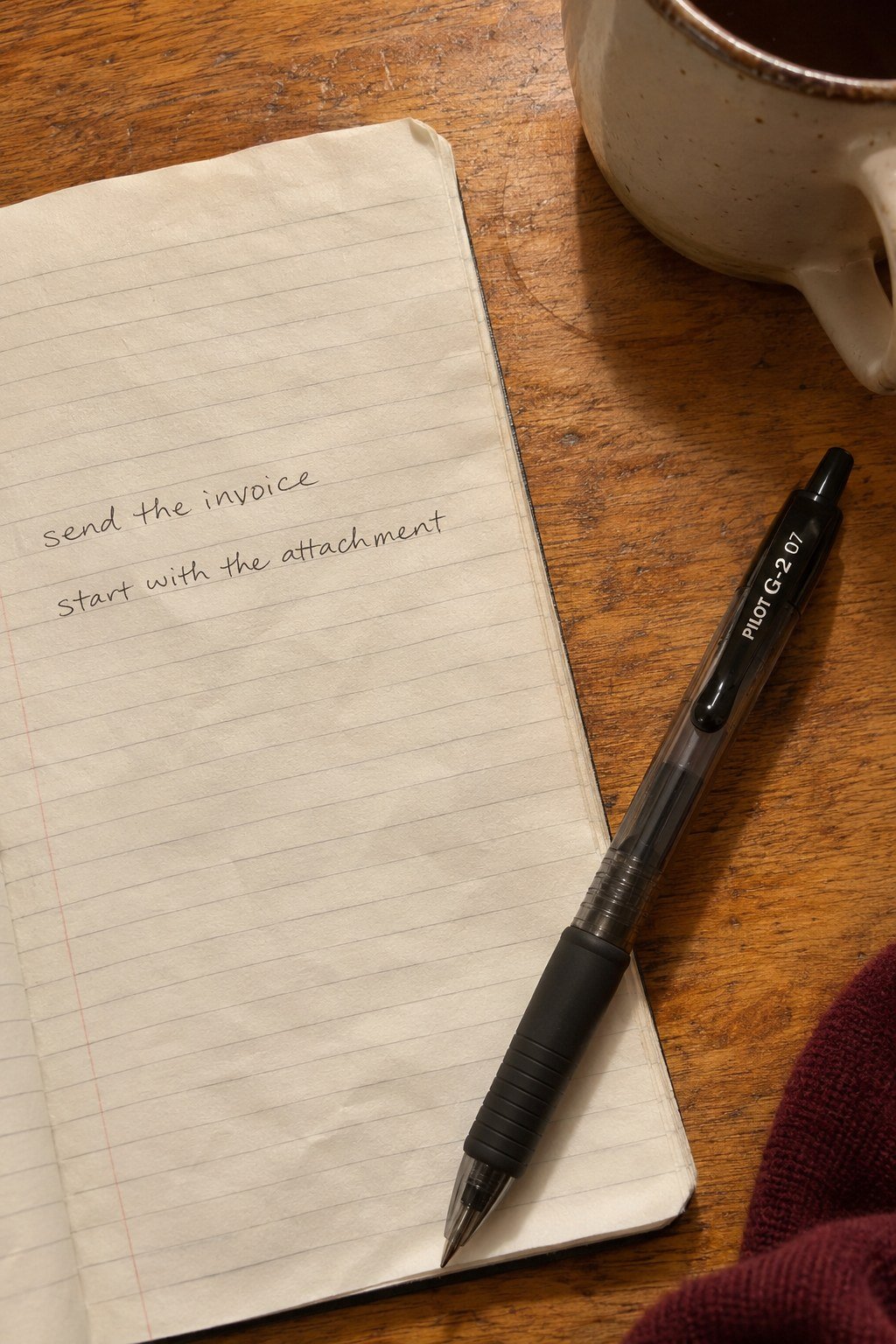
The problem: tomorrow’s tasks keep looping because your brain is trying not to lose them: send the invoice, return the form, pack the bag, call the dentist.
The action: write the task and its first physical step. “Send invoice” becomes “open the draft and attach October’s PDF.” “Start presentation” becomes “name the file and write three headings.”
This is a handoff, not a full planning session. The NHS guidance on winding down for sleep also suggests writing a next-day list when worries are keeping you awake.
Do the getting-ready part early
The problem: you finally get comfortable on the sofa, then remember teeth, skin care, medication, contact lenses, or tomorrow’s lunch. The routine feels like a second shift.
The action: do the essential getting-ready steps before your chosen downtime. Change clothes, brush your teeth, wash your face, and handle any prescribed routine exactly as directed. Then the sofa is the last stop, not a trap before another list.
Keep the sequence short enough that you will repeat it. A two-step skin routine used consistently is more realistic than seven steps you avoid.
Pick downtime with an ending
The problem: open-ended relaxation can quietly become another source of stress. A feed has no final page; a streaming app always offers the next episode.
The action: choose something that finishes on its own: one chapter, one cup of tea, one crossword, one playlist, or the remaining twenty minutes of an episode you already started.
Keep the pleasure. Add an edge. A clear ending helps you avoid deciding again when you are already tired.
Make one decision for the morning
The problem: morning feels heavy before it starts because it contains too many small choices—clothes, breakfast, bag, route, first task.
The action: remove one decision. Put a mug beside the kettle, set out the top you plan to wear, place keys in the bag, or write the first work task on a note.
Do not prepare an ideal morning. Prepare the moment that usually slows you down.
Know what still counts on a hard night
The problem: a late shift, a sick child, an unexpected call, or family needs can erase the plan. Then missing one routine feels like failing the whole week.
The action: define a hard-night minimum in advance. It might be medication as prescribed, teeth, water, alarm, and phone on charge. Write that list where you can see it.
If you get home at midnight, begin there. If the family schedule changes, move the routine instead of abandoning it: a ten-minute reset can happen after everyone settles, and a three-minute reset can happen beside the bed.
Choose your 3-, 10-, or 20-minute night routine
The best version is the one that fits the evening you actually have. Pick a row before you begin so the routine has a finish line.
| Time | Do this | Clear stopping point | Best for |
|---|---|---|---|
| 3 minutes | Park the phone, write one tomorrow task, complete one getting-ready step. | Stop when the timer rings. Do not restart chores. | Late shifts, family interruptions, or very low energy. |
| 10 minutes | Contain the kitchen, complete essentials, write tomorrow’s first step, set out one morning item. | Stop when the essentials and one morning decision are done. | Ordinary busy weeknights. |
| 20 minutes | Do the 10-minute reset, then add one chapter, one drink, or one short episode segment. | Stop at the end of the chosen chapter, cup, playlist, or timer. | Nights when you need both order and real downtime. |
What is inside the Evening Reset Kit?
The printable is deliberately small. It gives you a place to stop, not another project to perfect.
Send the free kit to your inbox
Choose your printer size after the email arrives. Both the A4 and US Letter files contain the same three useful pages.
A routine is allowed to be small
You do not need to win the evening. You need a point at which the workday, housework, and mental tabs are allowed to close. Some nights that point arrives after twenty peaceful minutes. Some nights it is one note, one toothbrush, and the other sock.
If you want more practical, saveable ideas for everyday life, explore the latest Lifestyle stories on Trend & Space.
One question for you
What is the one unfinished task that most often keeps your evening from feeling finished?
Visual note: The article visuals are AI-generated editorial illustrations supplied by Trend & Space. A worn copy of The Little Prince and a Pilot G2 pen appear as realistic props; their titles and trademarks remain the property of their respective owners. No brand endorsement or personal product test is implied.