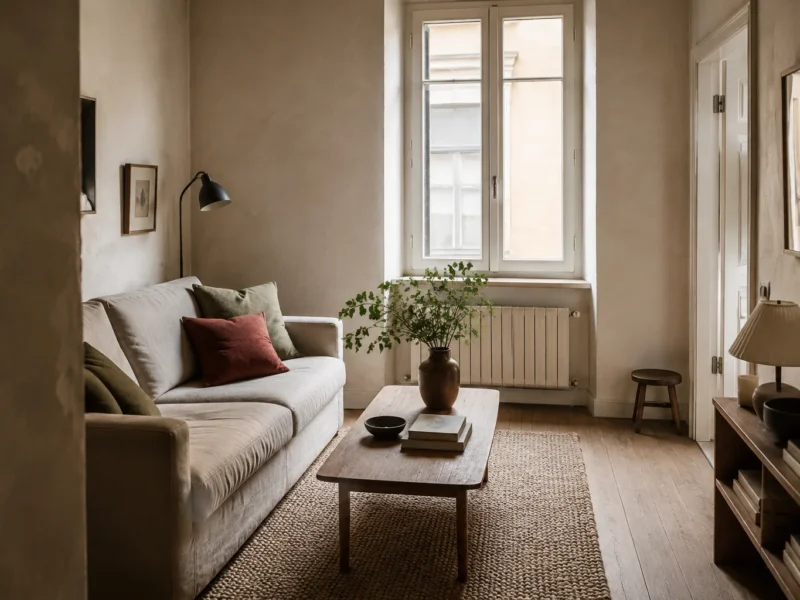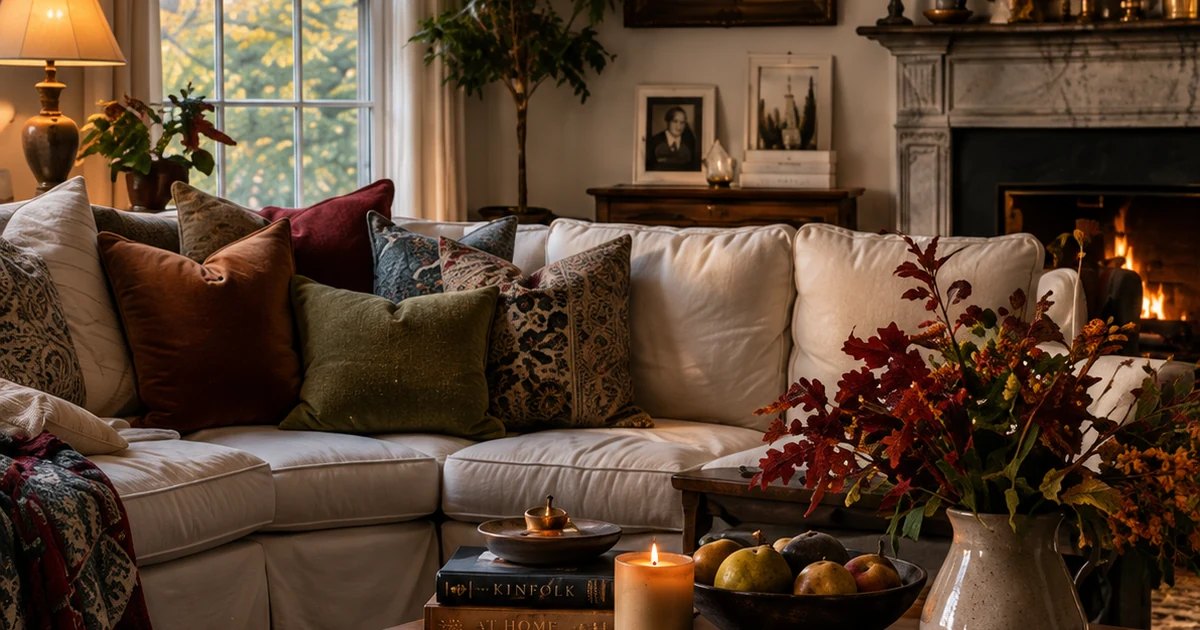
September arrives and suddenly a lot of fall homes begin to feel strangely familiar: the same orange throw, the same row of matching pumpkins, the same sign telling us what season it is. Walk through any big-box seasonal aisle and it is easy to see how a room can become a copy of a display before we have asked what would make it feel good to live in.
That is the question I come back to: does the room actually feel cozy and personal, or does it simply photograph like fall?
An anti-algorithm fall home is not deliberately messy, anti-shopping or hostile to trends. It uses trends as inspiration instead of instructions. The most convincing rooms usually mix things already owned, older or thrifted pieces, natural texture, seasonal produce or branches, warm light and visible personal interests. A few new purchases can belong there too—but only when they solve a real gap.
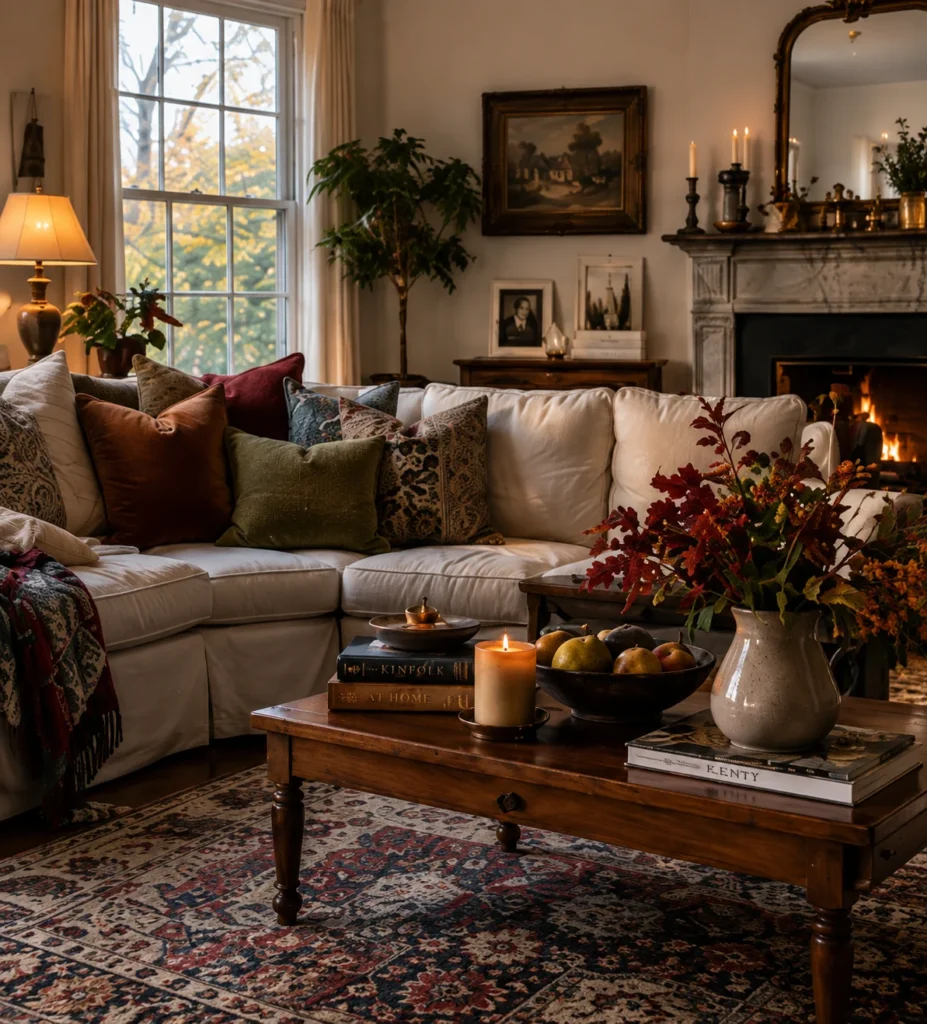
A fall room can feel seasonal without becoming a seasonal display.
What Does “Anti-Algorithm” Fall Decor Actually Mean?
It means resisting copy-and-paste styling, not style itself. An algorithm is very good at showing us more of whatever held our attention yesterday. After enough scrolling, one specific version of autumn can begin to look like the only correct version: identical pumpkins, coordinated pillows, a perfect tray and nothing that reveals a real hobby, habit or history.
Inspiration is useful. Duplication is where a room can lose its personality. Save the image for its candlelight, color balance or relaxed layering—then translate that quality using your own books, textiles, tableware and routines.
My goal isn’t to make a room look untouched by trends. It’s to make sure the trend never becomes more visible than the person who lives there.
1. Shop Your Own Home Before You Shop for Fall
The feeling that you need a new seasonal collection is often really a need to see familiar things in a new arrangement. Start with a slow walk through the house. Look for books in burgundy, green, brown or mustard; baskets; pottery; bowls; trays; quilts; scarves; wool throws; wooden objects; brass pieces; framed art; cutting boards and everyday ceramics.
Do not judge each object by whether it was sold as “fall decor.” Judge it by color, material, texture and usefulness. A brown mixing bowl can hold apples. A scarf can soften a bench. A wood cutting board behind the stove can add warmth without taking up another working surface. Moving one object from a bedroom to a living room can make it feel newly noticed.
Try this 10-minute exercise
Choose just five things: one textile, one vessel, one stack of books, one warm metal object and one natural object. Style those before adding anything else. If the arrangement feels complete, stop. The stopping point is part of the design.
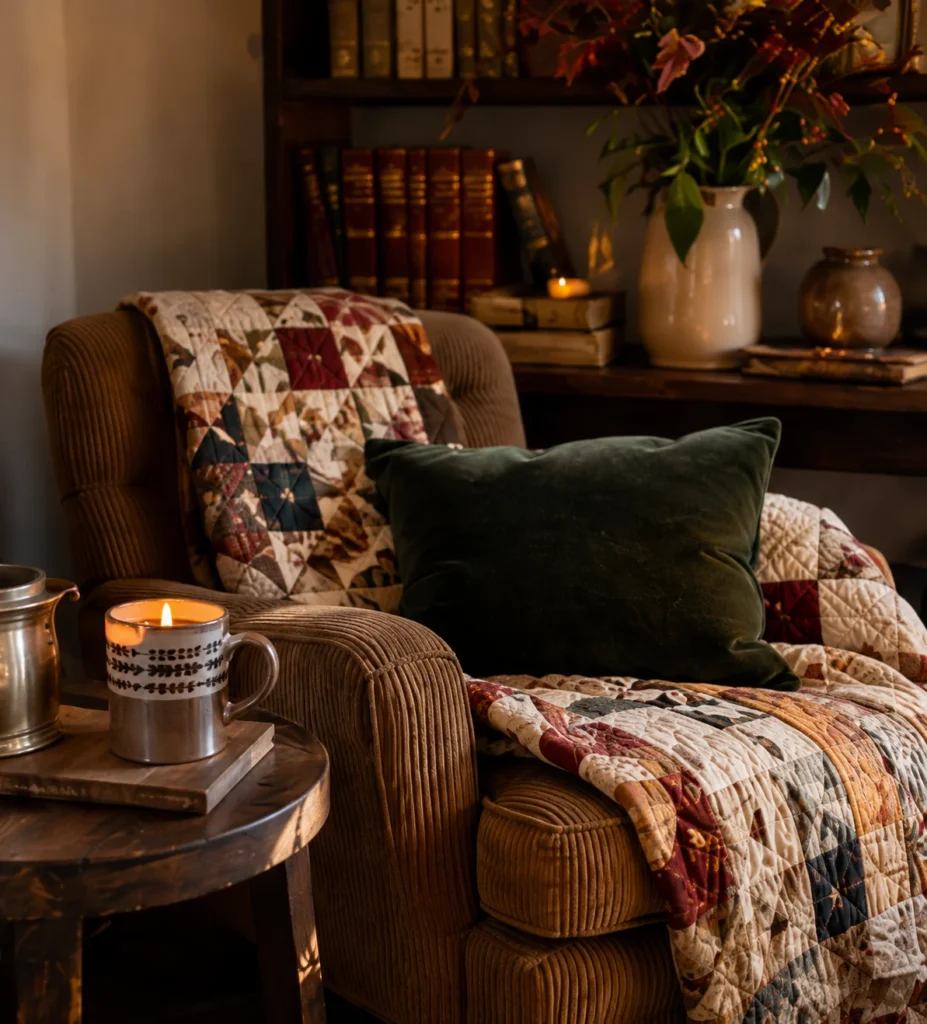
A reading chair needs very little: an old quilt, a useful cushion, a nearby book and warm light. This is also a good place to borrow ideas from our guide to making a small living room feel calm rather than crowded.
2. Thrift for Character, Not Just More Stuff
Thrift stores, flea markets, antique markets, estate sales and charity shops can be wonderful sources for useful pieces that already have visual depth. The aim, however, is not to bring home every inexpensive object with a little patina. Old does not automatically mean beautiful, useful or right for your space.
Look first at shape, material, color, function and condition. Does the bowl hold fruit? Is the frame a size you will use? Will the candlestick stand steadily? Can the tray carry drinks after October? A small chip may add character to a decorative vessel; a loose base or sharp crack is simply a problem.
My thrift list would include mixed brass candlesticks, amber or olive glass, stoneware, wood trays, old frames, interesting bowls and books you would genuinely want to open. Choose pieces one at a time and let them disagree slightly. Different heights and signs of age are often what make the grouping believable.
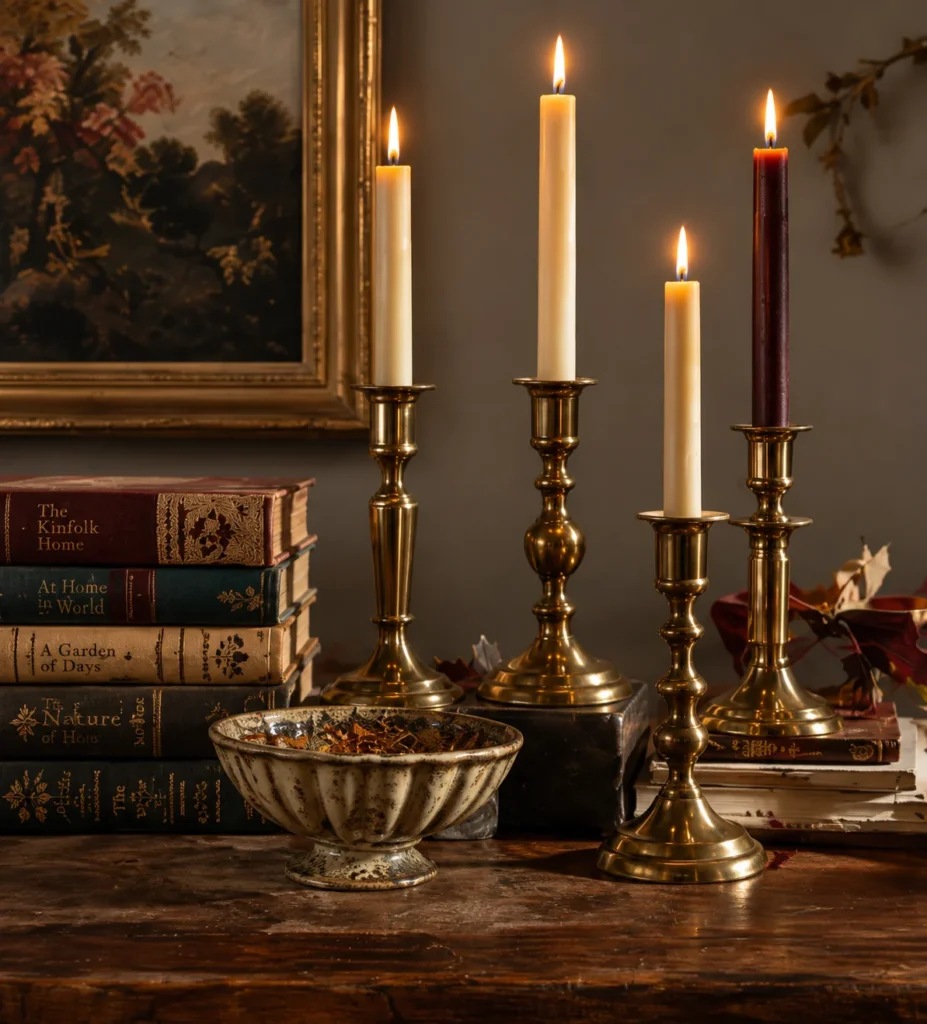
If you have a good thrift store nearby, I’d look there first. But if you want the effect without spending Saturday hunting for a matching pair, an antique-style brass set is an easy shortcut. See the brass candlestick set
Skip it if: you already own stable candleholders in silver, black or ceramic. The finish matters less than using them with intention.
3. Use Colored Glass to Add Warmth Without Adding More “Fall Decor”
Amber glass works because it changes the color of the light around it without announcing a season. A bottle on a windowsill, a small vase on a shelf or a few warm-toned glasses on the table can soften a room while staying useful all year.
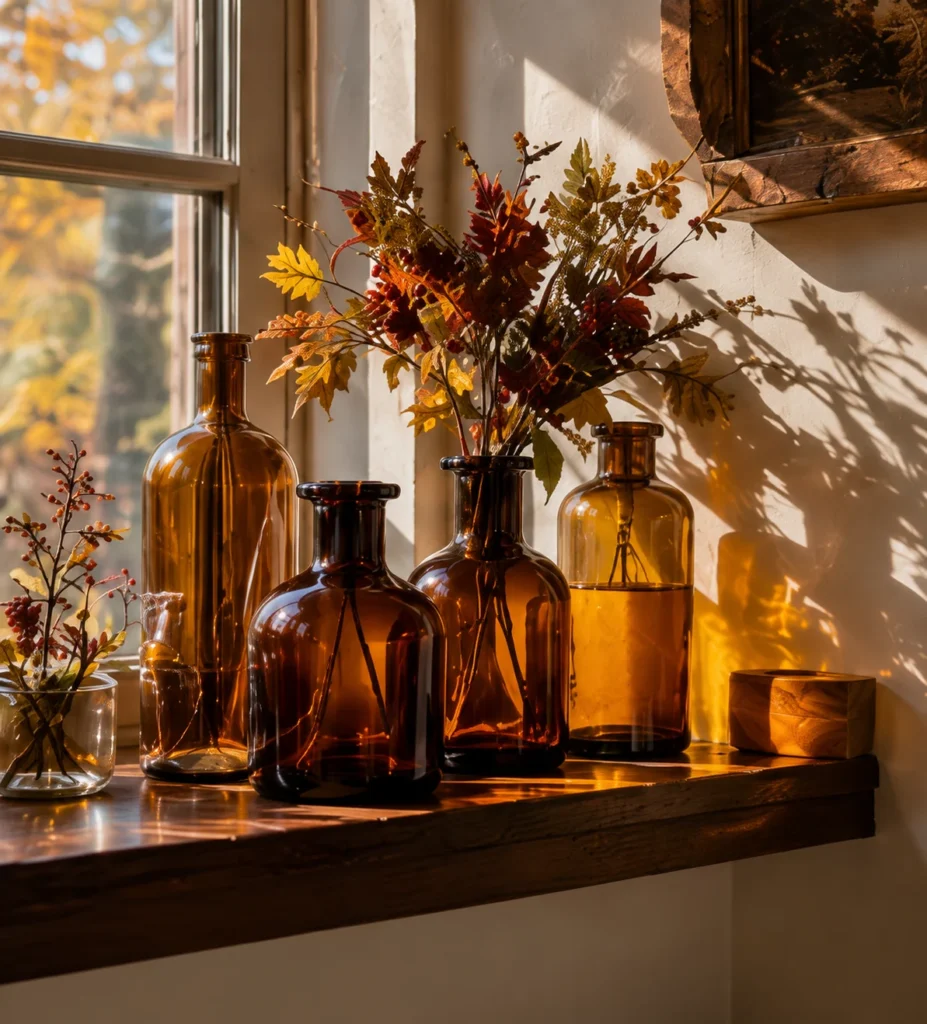
Keep a little empty space around translucent objects so light can pass through them. One glass vessel beside a stack of books often has more presence than a row of tiny themed decorations.
If your shelf or table still feels visually cold after you’ve restyled what you own, colored glass is one of the few additions that can change the mood without making the room feel more crowded. The linked set is green, not amber, but it creates the same colored-glass warmth in a cooler palette. See the vintage green bud vase set
Skip it if: you have bottles, jars or vases that can be grouped by color already. Clear glass can feel warm too when it catches lamplight.
4. Let Textiles Feel Familiar Instead of Perfect
A quilt draped loosely over a chair has a different emotional effect from a new pillow printed with a seasonal slogan. One looks ready to be used; the other often reads as a temporary prop. This does not mean every textile needs a family story. It simply needs texture, comfort and a reason to be there.
Try cream with olive, burgundy with oatmeal, tobacco brown with moss, or muted blue with warm wood. Not everything has to turn rust-colored for the room to read as autumn. Repeating one deeper color two or three times is usually enough.
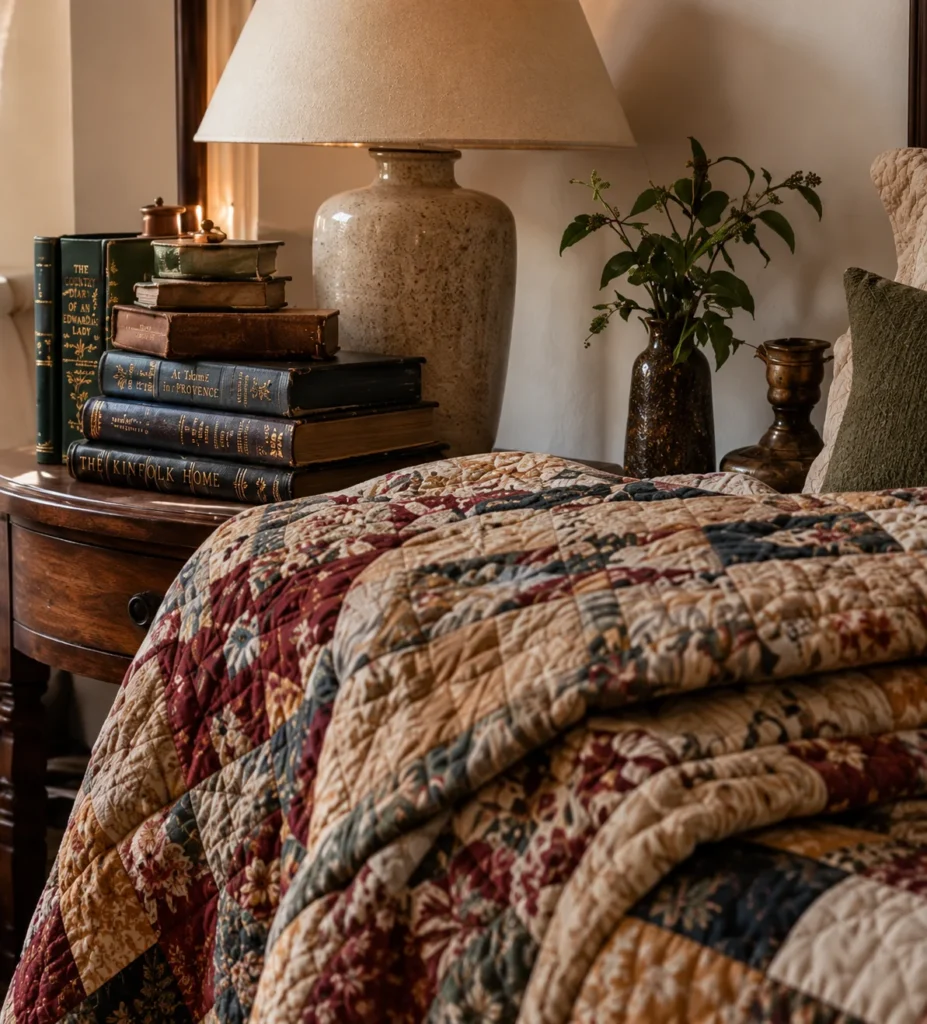
Use quilts, wool throws, washed linen and textured cotton where hands naturally reach for them. Let a patterned textile be the expressive piece, then keep nearby surfaces quieter. Books, inherited objects and older fabrics add depth because they do not all arrive in the room at once.
If you don’t already have a textile with enough texture, this is where one useful purchase can do more than five decorative objects. The linked option is a caramel-toned cotton-blend runner with macramé texture rather than stonewashed linen. See the textured table runner
Skip it if: a scarf, tea towel or narrow throw you own can do the same job. A runner should protect or soften a surface, not merely fill it.
5. Bring Fall Indoors From Outside—Carefully
Natural material gives a room seasonality without requiring a storage bin. Use fallen branches, leaves, pinecones, acorns, garden cuttings or seasonal herbs from your own yard or from a place where collecting is clearly permitted. Farmers’ markets and florists are good alternatives when outdoor gathering is not appropriate.
Before branches come indoors, shake and inspect them outside. Avoid anything visibly moldy or damp. Keep dry leaves and stems well away from open flames, radiators and hot bulbs. Place tall branches in a heavy, stable vessel and add a protective pad underneath on delicate wood or stone.
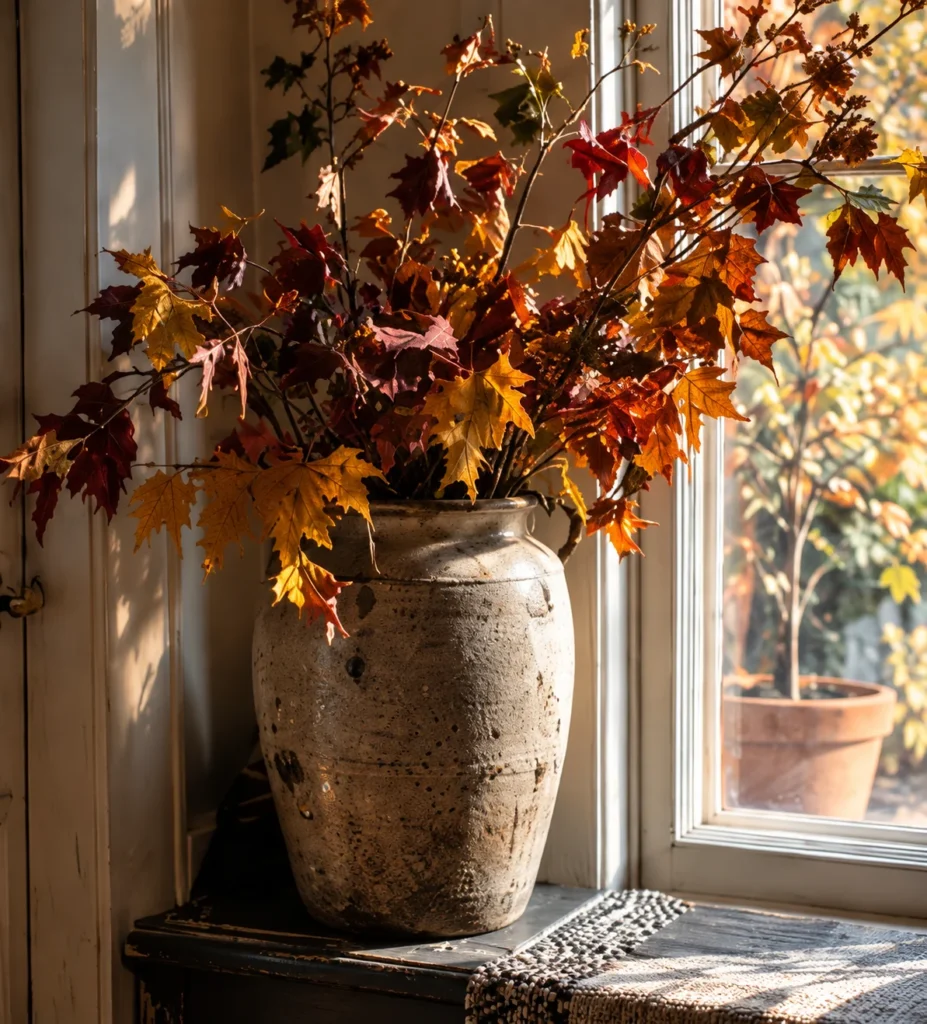
The arrangement does not need to be symmetrical. Turn the longest branch toward the open side of the room, keep the base simple and let a little movement remain. For a tall branch arrangement, the vessel matters more than the branches. A heavy ceramic base keeps the arrangement grounded instead of making the whole setup feel precarious. See the heavy ceramic vase
Skip it if: you already own a weighty pitcher, crock or umbrella stand that safely supports the height you want.
6. Use Real Seasonal Produce as Decor You Can Actually Use
A bowl of pears can be decor today and food tomorrow. That simple usefulness is why seasonal produce often feels more natural than a dozen imitation objects. Heirloom pumpkins, apples, figs, grapes and squash bring irregular color and shape that no matched set can quite reproduce.
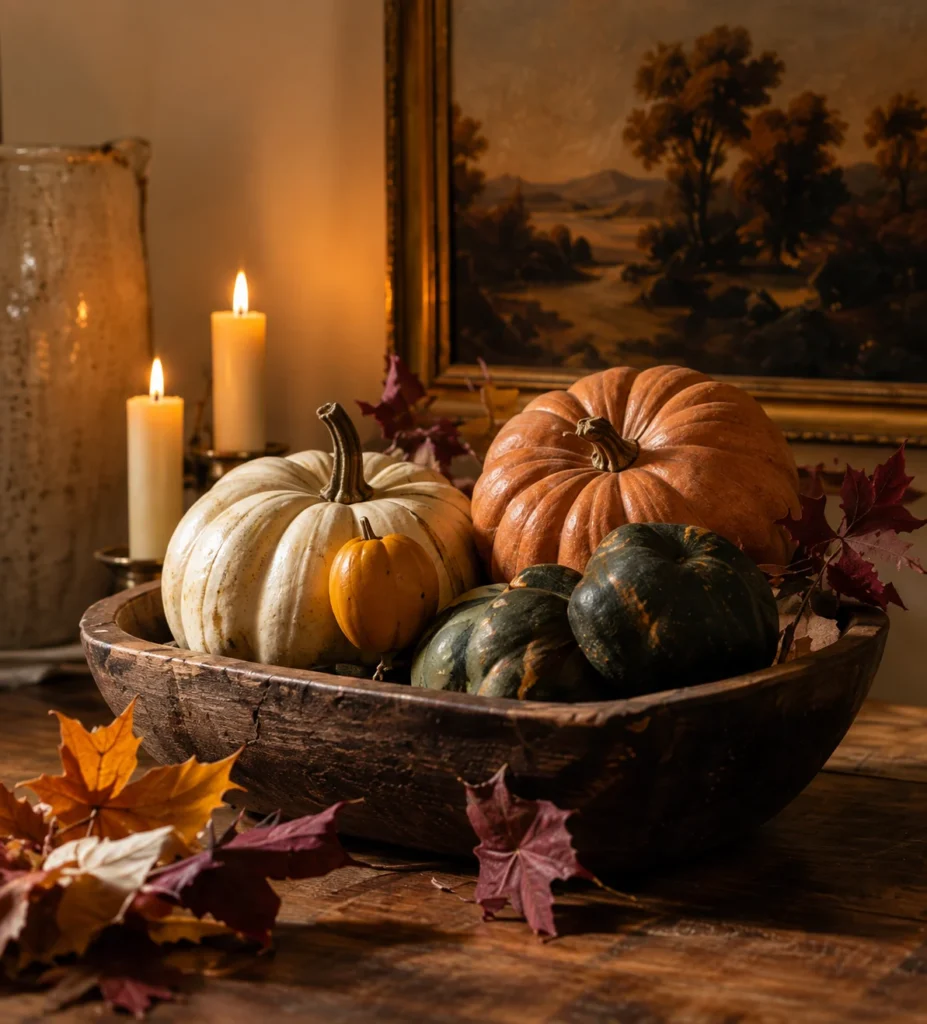
Use produce where it can be seen and eaten, not piled so high that the table stops functioning. Check it regularly, rotate pieces that are touching, and remove anything soft or spoiling. A wood bowl of three small pumpkins can hold the center of a coffee table; a shallow platter of apples can move to the kitchen when guests need the dining surface.
My rule is simple: if food is serving as decoration, it still needs to be treated like food. Wash it before eating, keep it in appropriate conditions and never let the display become an excuse for waste.
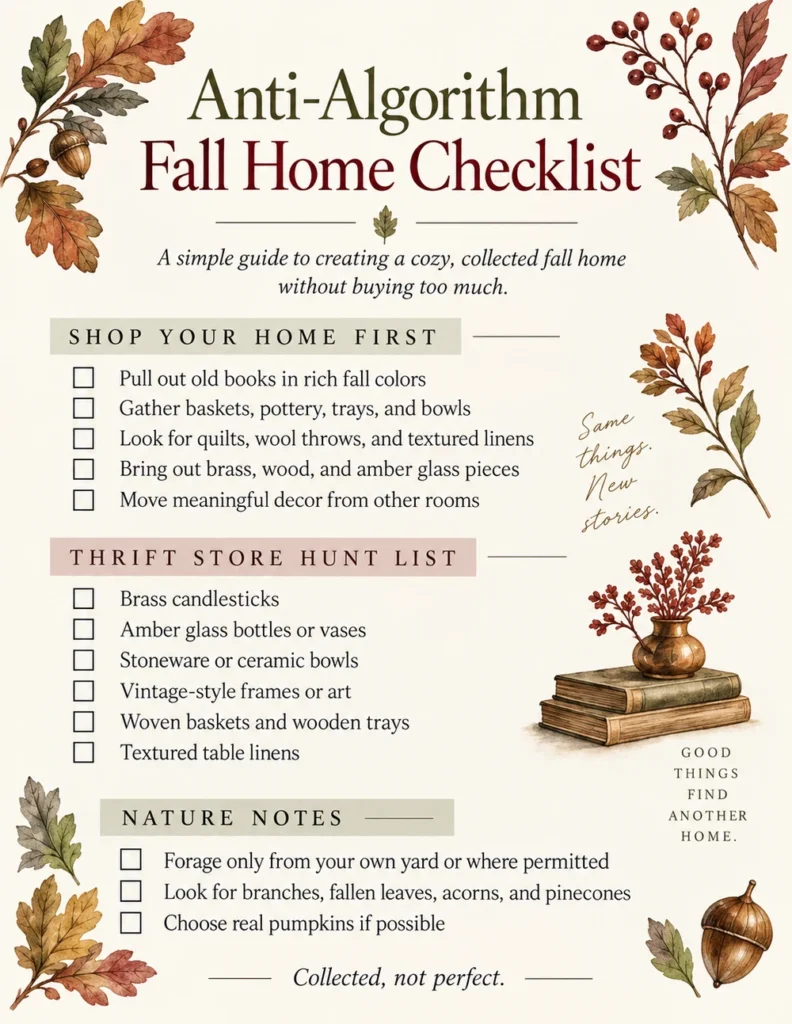
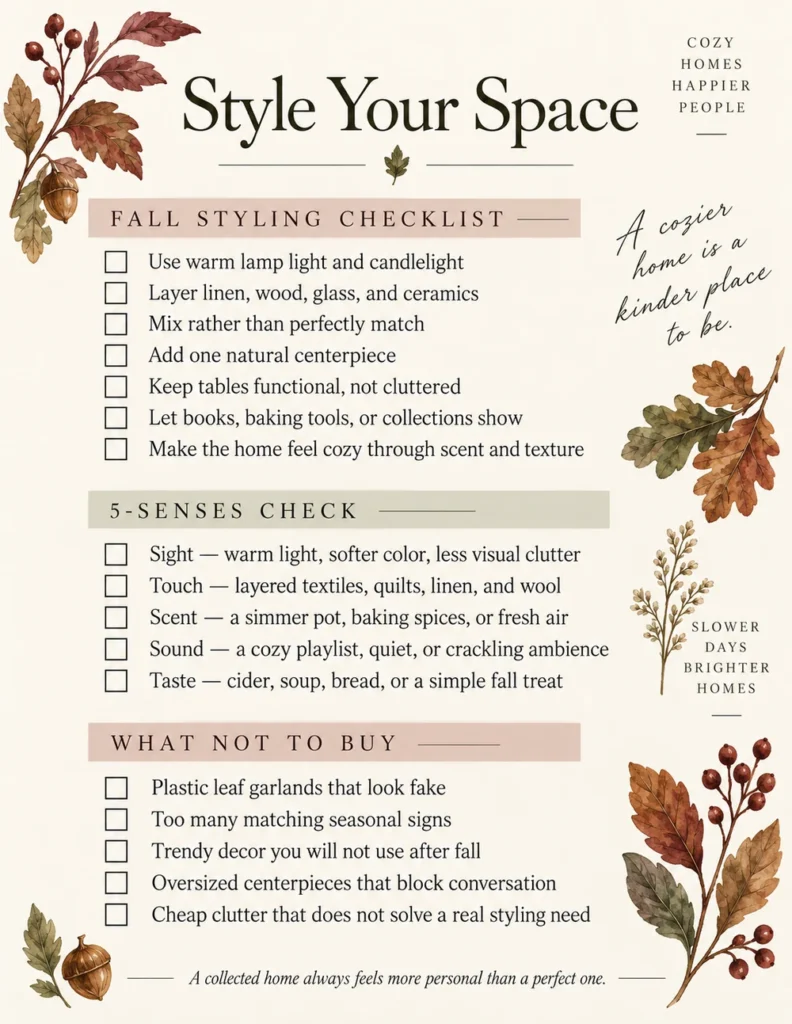
Free two-page printable
Want a Simple Version to Keep Beside You?
If you’re styling room by room and don’t want to keep scrolling back through this guide, I turned the main ideas into a free two-page checklist. Print it, take it thrifting, or keep it open on your phone while you work through the house.
2 printable pages • free direct download • no email required
7. Decorate for All Five Senses, Not Just the Camera
Some rooms look cozy on a screen but feel oddly flat in person. Usually the missing layer is not another object—it is sound, scent, touch, taste or better light. A home becomes memorable when the experience continues after you stop looking at it.
Sight
Use warm lamp light in several low pools instead of relying only on one bright ceiling fixture. Lower the contrast between light and shadow, and use candlelight where it is safe. A dimmer or a lower-lumen warm bulb can change the room more than a new centerpiece.
Touch
Put linen, quilt, wool, wood and ceramic where they will actually be handled. The edge of a throw on the sofa, a smooth mug by the kettle and a wood tray beneath a book make comfort physical rather than decorative.
Scent
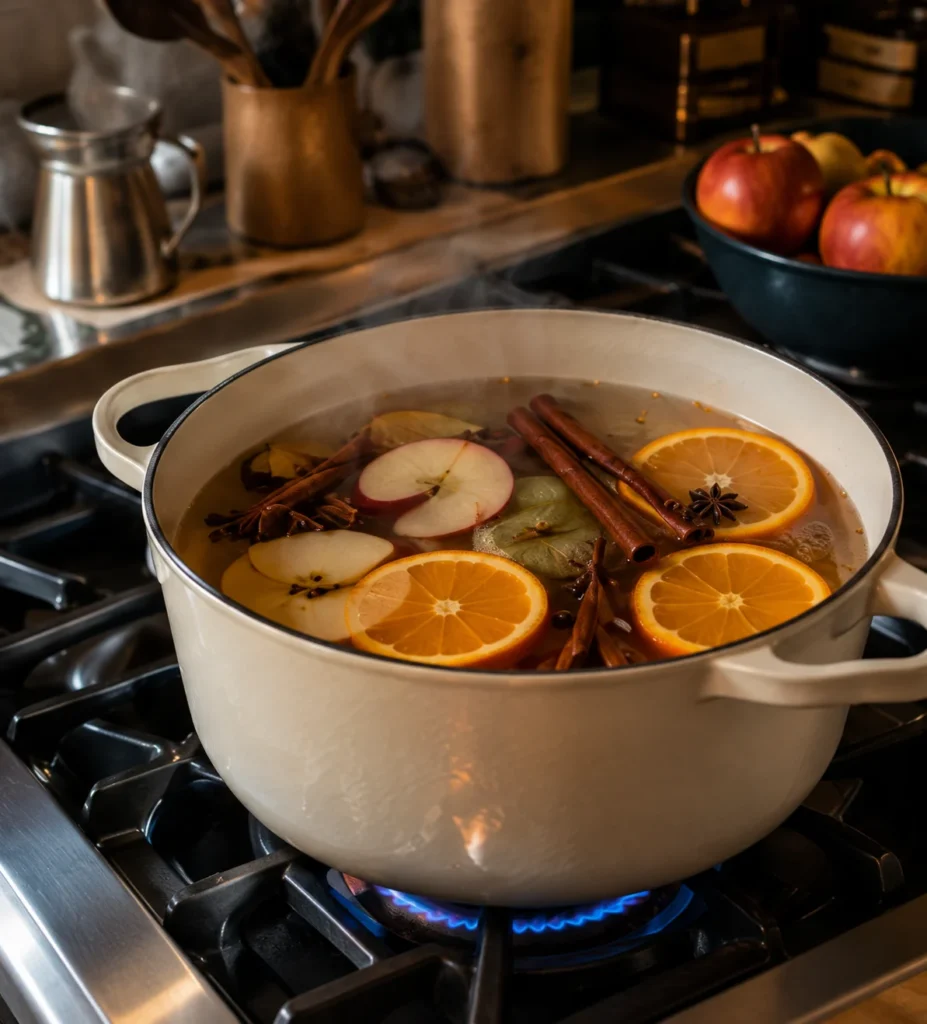
A stovetop simmer pot is simple: cover apple slices and orange slices or peel with water, then add two or three cinnamon sticks, a few whole cloves and optional star anise. Keep it at a gentle simmer, check the water regularly and never leave a stovetop pot unattended.
Sound
Choose a quiet playlist, fireplace ambience when appropriate, or simply less background television. Sound should support conversation and concentration instead of asking for attention.
Taste
Serve something that belongs to the moment: cider, soup, bread, baked apples or an easy tray dinner. Our one-pan lemon herb potatoes and chickpeas are a practical starting point when the room feels ready but dinner does not.
8. Stop Making Everything Match
This is the point where “collected” can become either interesting or chaotic. The difference is a clear visual thread. Keep one or two qualities consistent—color family, material or shape—and allow variation elsewhere.
On a table, that might mean cream everyday plates, one botanical plate, amber and clear glasses, burgundy napkins, and brass candlesticks in different heights. The pieces do not match, but warm color and repeated curves make them speak to one another.
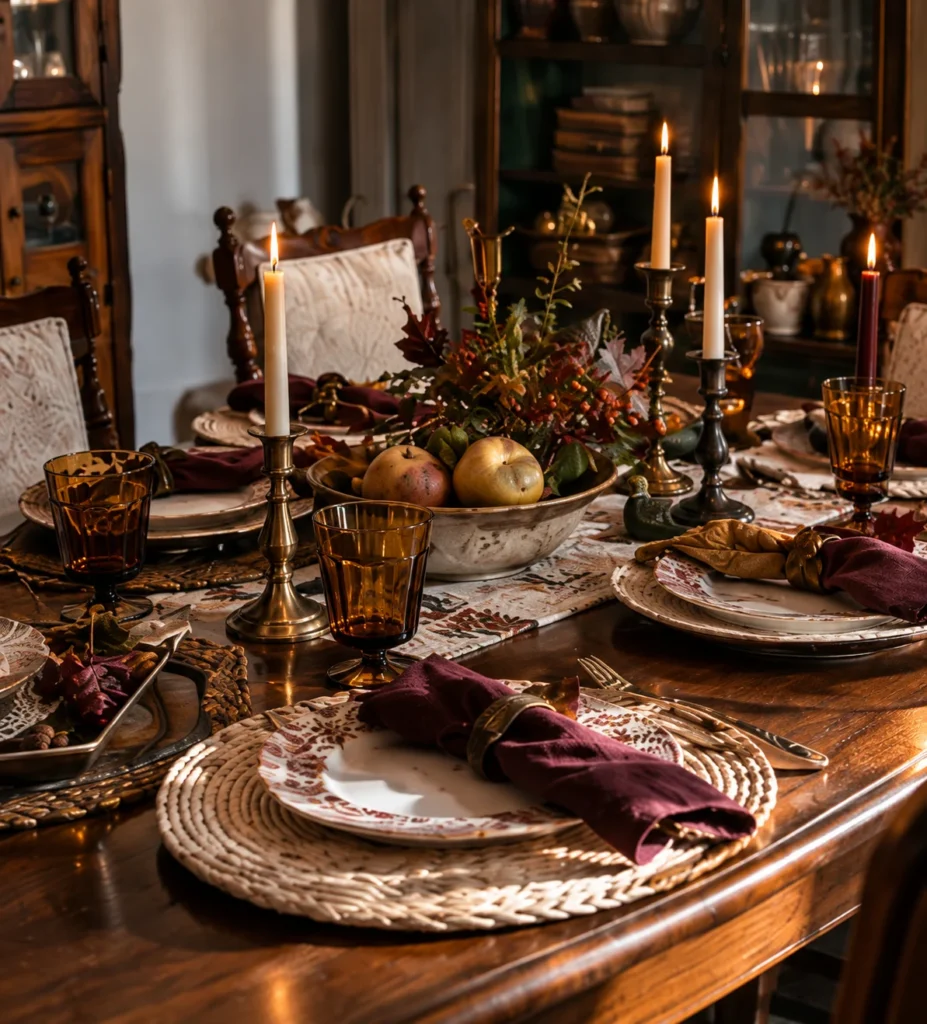
Before replacing your dinnerware, mix what you already have. If the table still needs one visual anchor, a patterned plate works better than buying an entirely new matching set. The linked product is a set of 7-inch vintage-floral disposable paper dessert plates, not permanent dinnerware. See the vintage floral dessert plates
Skip it if: you are avoiding disposables or already have a patterned plate to mix in. A borrowed salad plate or thrifted single can make the same point with less waste.
9. Leave Evidence of the People Who Live There
A home feels personal when hobbies remain visible. A reader’s stack of books, a baker’s bread board, a gardener’s clipped branches, a ceramic brought back from a trip, a family quilt, a framed photograph or an artist’s sketchbook can do more for atmosphere than an object purchased solely to fill a shelf.
The key word is evidence, not display. You do not need to stage every interest or turn private life into a vignette. Leave the useful, beautiful residue of real routines where it belongs: a basket for the current knitting project, cookbooks near the kitchen, walking boots by the door on a tray.
I would rather have one meaningful older-looking object than ten decorations that disappear into a box on November first. The room becomes yours when its most noticeable details could not have been ordered as a complete set.
10. What Should You Actually Buy?
You do not need all five of these. Start by fixing lighting or adding one useful textile. Next, add a vessel only if you need somewhere safe for branches or flowers. Consider glass or tableware only if the room still feels flat. Favor anything that can remain useful beyond October.
Brass candlesticks
Worth it if: you use taper candles throughout the year and need height.
Skip it if: you already have holders in another finish.
Colored glass
Worth it if: a shelf needs reflected color without more visual weight.
Skip it if: existing jars and bottles can make a useful grouping.
Textured runner
Worth it if: it protects the table and softens everyday dishes.
Skip it if: it will spend most of the year folded in storage.
Patterned plates
Worth it if: you need one clear pattern to connect mixed tableware.
Skip it if: you can borrow, thrift or mix in one you own.
Heavy vase
Worth it if: you arrange tall branches or flowers in several seasons.
Skip it if: a stable crock or pitcher already does the job.
Shop the Collected Fall Look
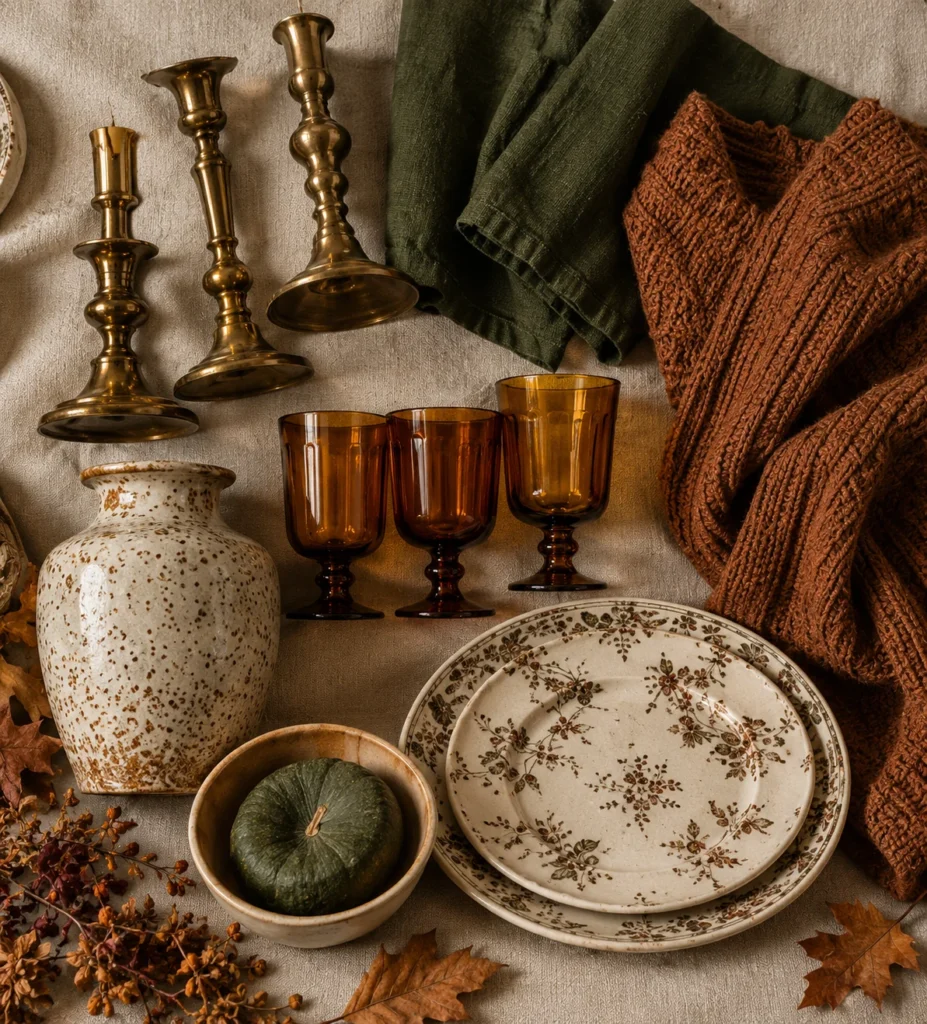
This is a short problem-solving list, not a prescription. Begin with the gap in your room, then choose no more than the piece that answers it.
- Brass candlesticksAdds height and warm metal; reusable year-round.View the set ↗
- Vintage green bud vasesAdds warmth through colored glass and reflected light.View the set ↗
- Caramel textured runnerAdds softness without creating visual clutter.View the runner ↗
- Vintage floral paper dessert platesA disposable option for a small dose of pattern; skip if you own one.View the plates ↗
- Heavy ceramic vaseSupports taller branches and remains useful outside fall.View the vase ↗
The next problem, already planned
Hosting This Fall? I Made the Planning Part Easier.
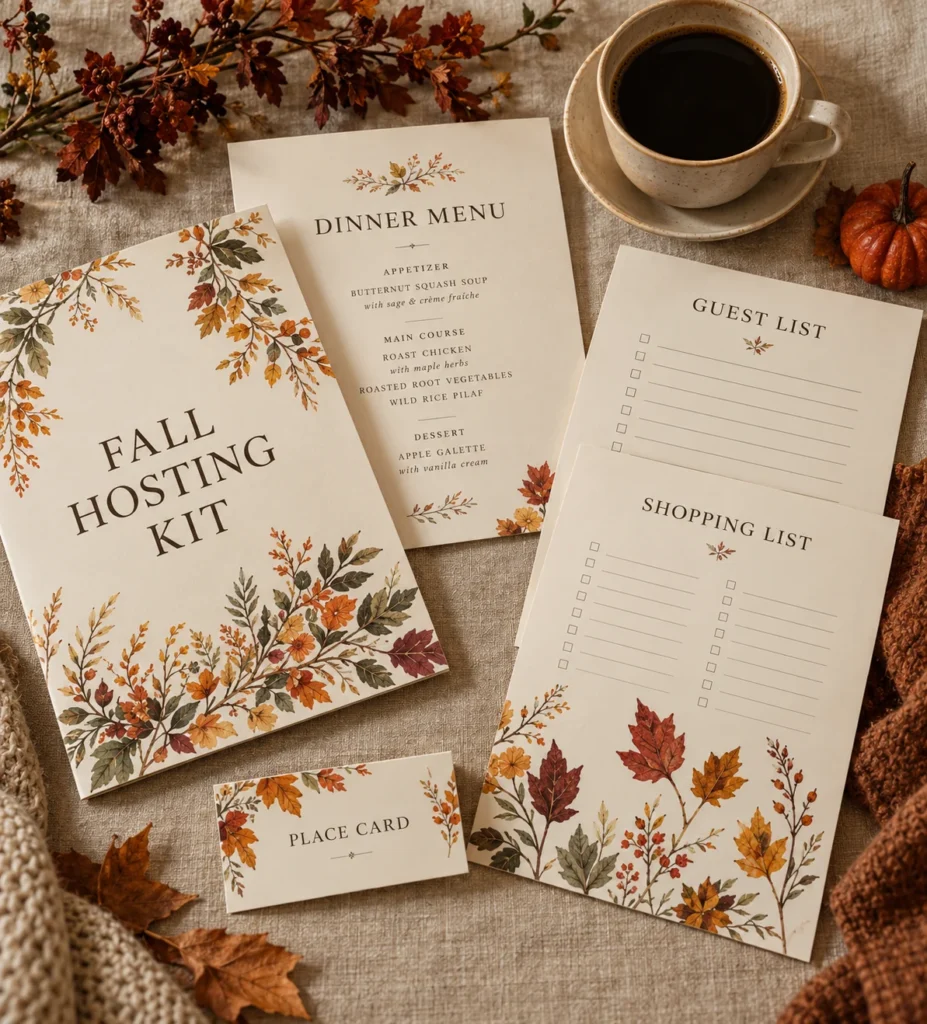
If you love the collected look but the menus, guest list, shopping notes and last-minute details are the part that wears you out, I put them into one printable kit. The Collected Fall Hosting Kit gives you the planning pages without telling you how your gathering has to look.
Use the pages you need. Ignore the ones you don’t.
The purchase link will appear here as soon as the kit is listed.
11. How to Do This in a Small Apartment
Small rooms need fewer objects with more presence—not miniature versions of every seasonal idea. Choose a five-piece formula: one textile, one bowl, one branch arrangement, two candles and one warm light source. Notice that several pieces are useful before and after fall.
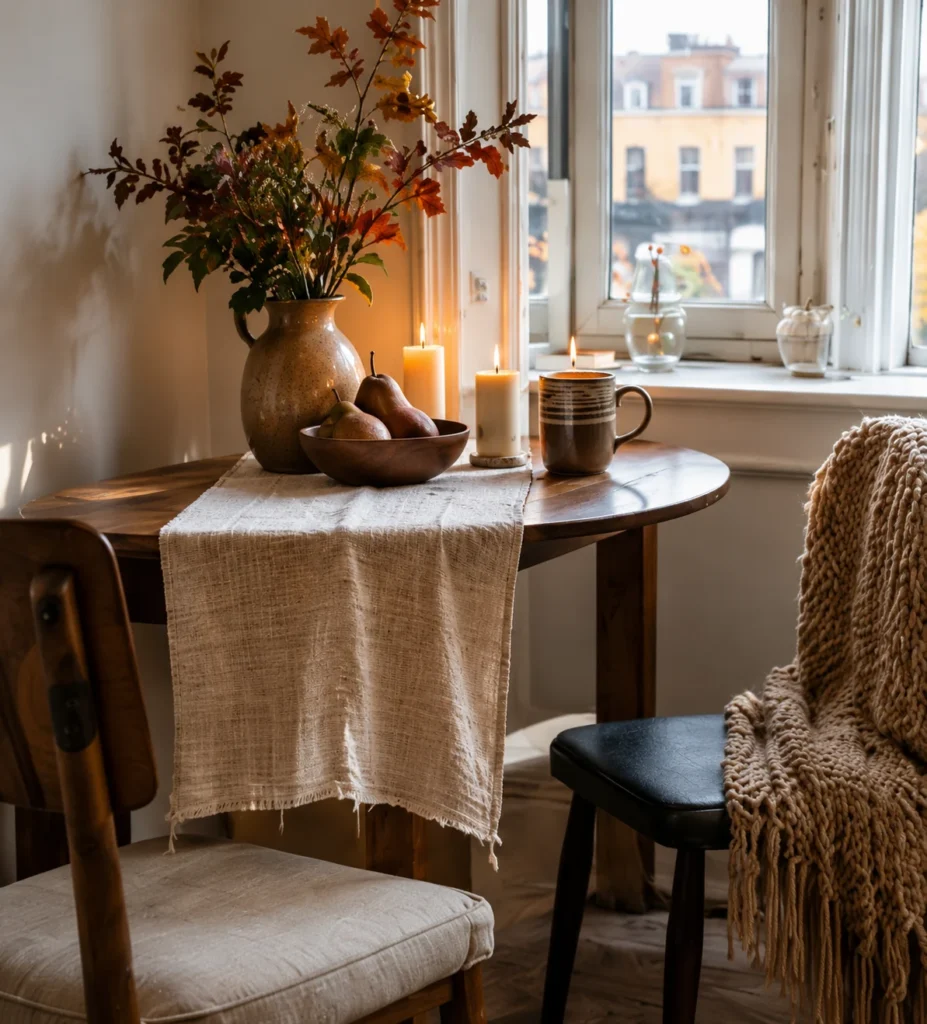
Keep the floor plan and sightlines clear. Let the branch arrangement occupy vertical space, place the bowl where it can hold food or keys, and use the textile where someone will sit. If the table is also a desk, the entire arrangement should be easy to move on one tray.
Do not decorate every ledge because it exists. In a compact home, an undecorated surface gives the eye somewhere to rest and gives daily life somewhere to happen.
12. What I’d Prioritize With a $50–$100 Fall Budget
First, spend nothing. Do the five-object exercise, change the layout and see what the room is truly missing. Then put the largest share of the budget toward lighting or a textile that will remain useful. A warm bulb, shaded lamp or substantial throw changes the way the whole room feels.
Second, choose one functional decorative piece: a stable vase, a tray, a bowl or candlesticks you will use again. Third, add a table accent only if you host or eat there often. Produce, branches and borrowed pieces can carry the rest of the season.
13. When “Collected” Starts Looking Like Clutter
Collected is not a polite word for crowded. The look begins to fall apart when too many small objects compete, unrelated colors multiply, every surface becomes decorated, centerpieces block sightlines or signs with words start explaining what the room should make us feel.
Seasonal-only pieces are especially easy to over-layer because each one seems small. Together, they remove the breathing room that made your ordinary possessions appealing in the first place.
Remove roughly one item from every crowded surface and reassess from the doorway. If three objects perform the same visual job, keep the strongest one. Then sit in the room and check whether a drink can be set down, a chair can be used and a conversation can cross the table.
The goal is not to create the most original home on Pinterest. It is to make fall feel recognizably yours—and to create something you can return to next year rather than restart from nothing.
Keep the pieces that tell a story. Let the season do the rest.
Free printable
Take the Checklist With You
Use the two-page guide while you shop your home, thrift and edit the final room.
Planning a gathering?
The Collected Fall Hosting Kit
An 18-page printable for menus, guests, shopping and the week before hosting.
Coming soon — product link pending
Frequently Asked Questions
What is anti-algorithm decor?
Anti-algorithm decor uses online inspiration without copying a complete, repeatable look. It favors what you own, personal interests, useful older pieces, natural material and a few thoughtful purchases over a room built from one trending collection.
How can I decorate for fall without buying a lot?
Move books, baskets, pottery, trays and textiles between rooms; add warm light; use seasonal produce or permitted garden cuttings; and edit before buying. Purchase only the item that solves a specific gap, such as a stable vase or a warmer textile.
What colors work for fall besides orange?
Try burgundy, moss, olive, oatmeal, tobacco brown, cream, amber, muted blue, plum or deep green. Repeating two or three related colors matters more than using a stereotypical fall palette.
Can anti-algorithm fall decor work in a small apartment?
Yes. Use fewer pieces with more presence: one textile, one bowl, one branch arrangement, two candles and one warm light source. Preserve working surfaces and keep the arrangement easy to move.
What should I look for at a thrift store for fall decorating?
Look for stable brass candlesticks, colored glass, stoneware, wood trays, useful bowls, frames and books you want to read. Check condition and function; do not buy something merely because it is old or inexpensive.
Does everything on a fall table need to match?
No. Keep one or two qualities consistent—such as color family, material or shape—and vary the rest. Mixed plates and glasses look intentional when a repeated color or finish connects them.
Can I decorate with branches and leaves from outside?
Use material from your own property or places where you have permission to collect. Inspect and shake branches outdoors, avoid moldy material, secure tall stems in a heavy vessel and keep dry foliage away from flames and heat.