You have the guest list, the grocery list, and a table that still looks like an ordinary weekday. Then you start browsing Thanksgiving inspiration, and suddenly every beautiful setup seems to need new plates, matching glasses, and a centerpiece big enough to have its own delivery fee.
Here is where I would simplify: keep the dishes, choose one color to repeat, and spend your effort on the places people actually notice—the center of the table and the seat waiting for them.
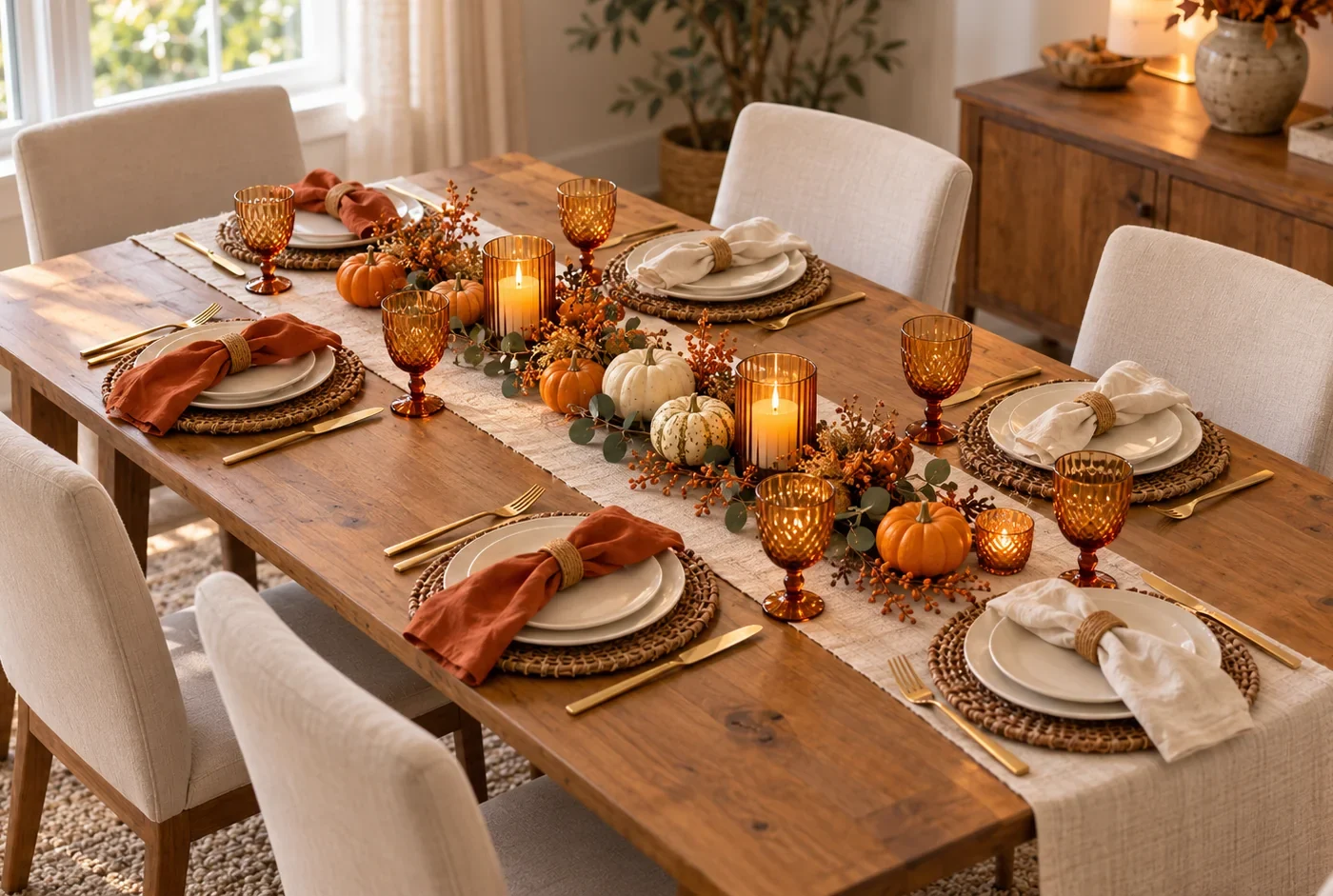
These Thanksgiving table decor ideas on a budget are designed for real dinner plans, not a showroom. You will find an easy budget Thanksgiving tablescape, simple place settings, and DIY Thanksgiving centerpiece ideas that reuse what you already own. Pick three or four details that work together—you do not need all 21.
Image note: The styled images are AI-generated decorating illustrations, not photographs of products we have tested. Linked products are similar options and may differ from the pictured items.
Plan your budget Thanksgiving tablescape before you shop
Put a plate, napkin, fork, knife, and glass on the table. Add an empty serving bowl in the middle. This gives you a better starting point than shopping from a photograph: you can see how much room is actually left.
Next, pick a palette from your existing things. Cream, olive, and wood feel relaxed. White, muted orange, and brown feel seasonal. Ivory and burgundy work well for an evening dinner. You only need to repeat the accent in two or three places.
If your dishes already have a pattern, borrow a color from them instead of introducing another one. Our guide to a cozy, collected fall home takes the same use-what-you-have approach beyond the dining table.
21 easy Thanksgiving table decor ideas on a budget
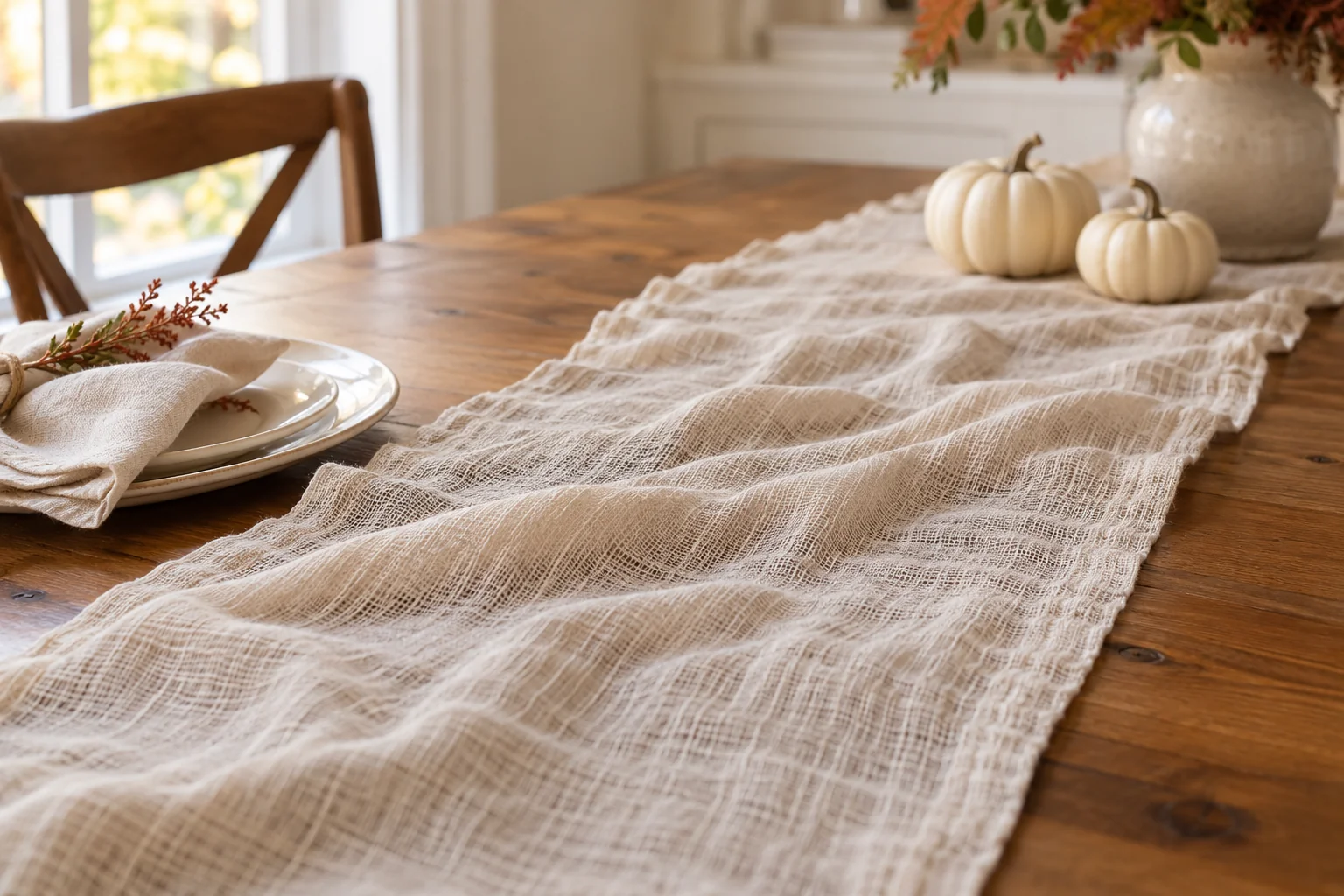
1. Let a cream runner soften the table
A runner is a good first purchase if your table feels a little bare but you like its wood finish. A cream or oatmeal shade gives the plates and centerpiece a shared background without covering everything up.
Lay it down the middle and smooth the areas beneath your decorations. A few loose folds look relaxed; a mound of fabric under a vase is simply wobbly. If you already own a suitable runner, use it. Check the table length before ordering so the ends fall where you want them.
A practical touch: Try a neatly finished strip of spare fabric before buying a new tablecloth.
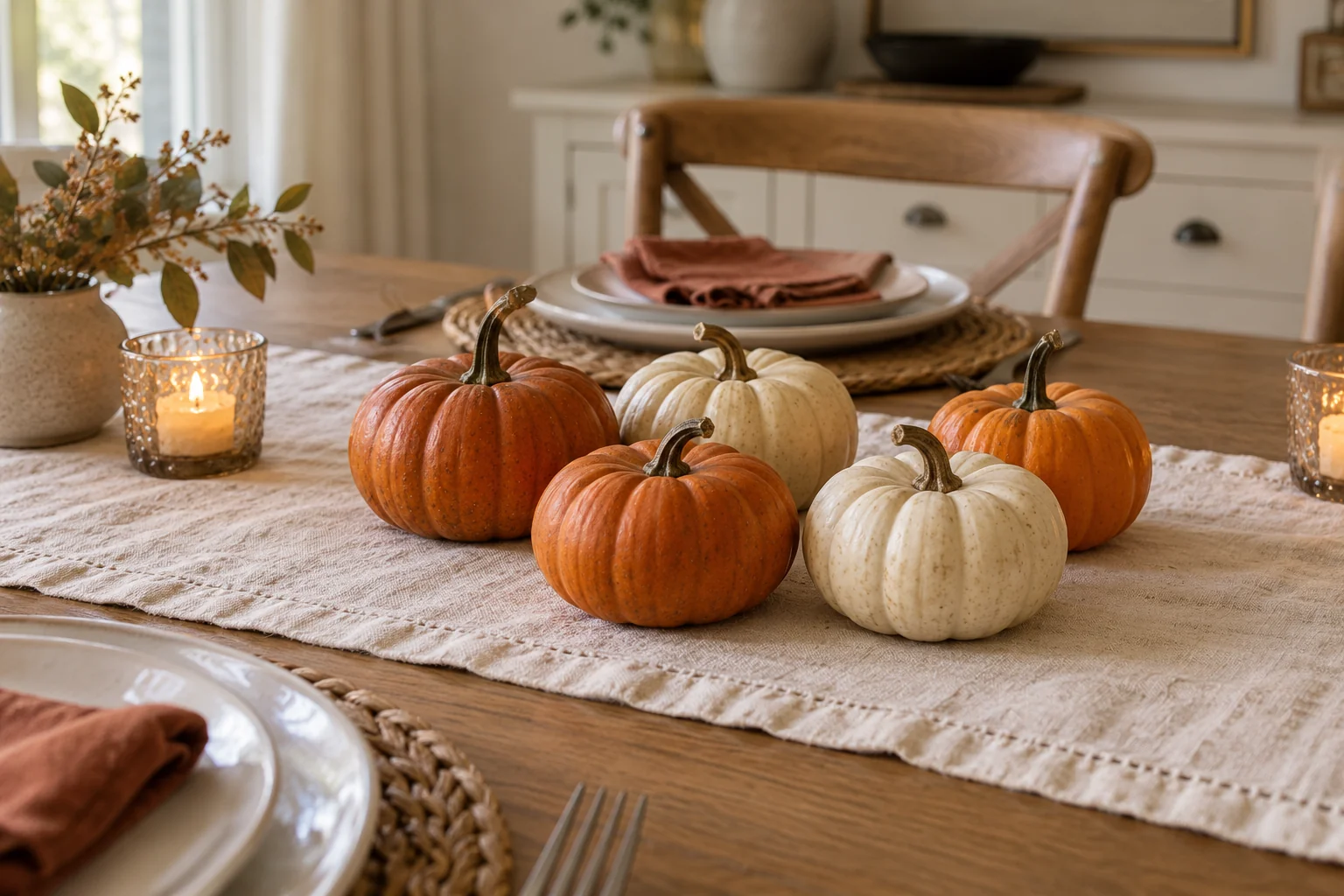
2. Give mini pumpkins room to breathe
A handful of small pumpkins can do more for a table than a long, crowded garland. Start with three or five, mixing cream and muted orange if those colors suit your dishes. For more natural-material inspiration, Bob Vila’s inexpensive Thanksgiving table ideas offer additional ways to use foliage, fruit, and fall color.
Spread them into little groups rather than making one solid barrier. Then put an empty serving bowl beside them. If it cannot fit, move a pumpkin now, before the food arrives. Already decorated for fall? Borrow pumpkins from the mantel for the evening instead of buying a second set.
A practical touch: For a narrow table, one pumpkin at either end of the centerpiece may be enough.
3. Make your everyday plates feel intentional
You know those white plates you use on a normal Tuesday? Start there. Wipe the rims, line them up, and repeat the same napkin treatment at each seat. That consistency does much of the decorating work.
Layer a smaller plate only if you will use it. An extra plate that gets removed before dinner adds washing up without making the meal better. If you need a simple guide to fork and knife placement, the Emily Post table-setting guide is a helpful reference.
A practical touch: Use only the utensils the menu needs; a home dinner does not need a restaurant-sized setting.
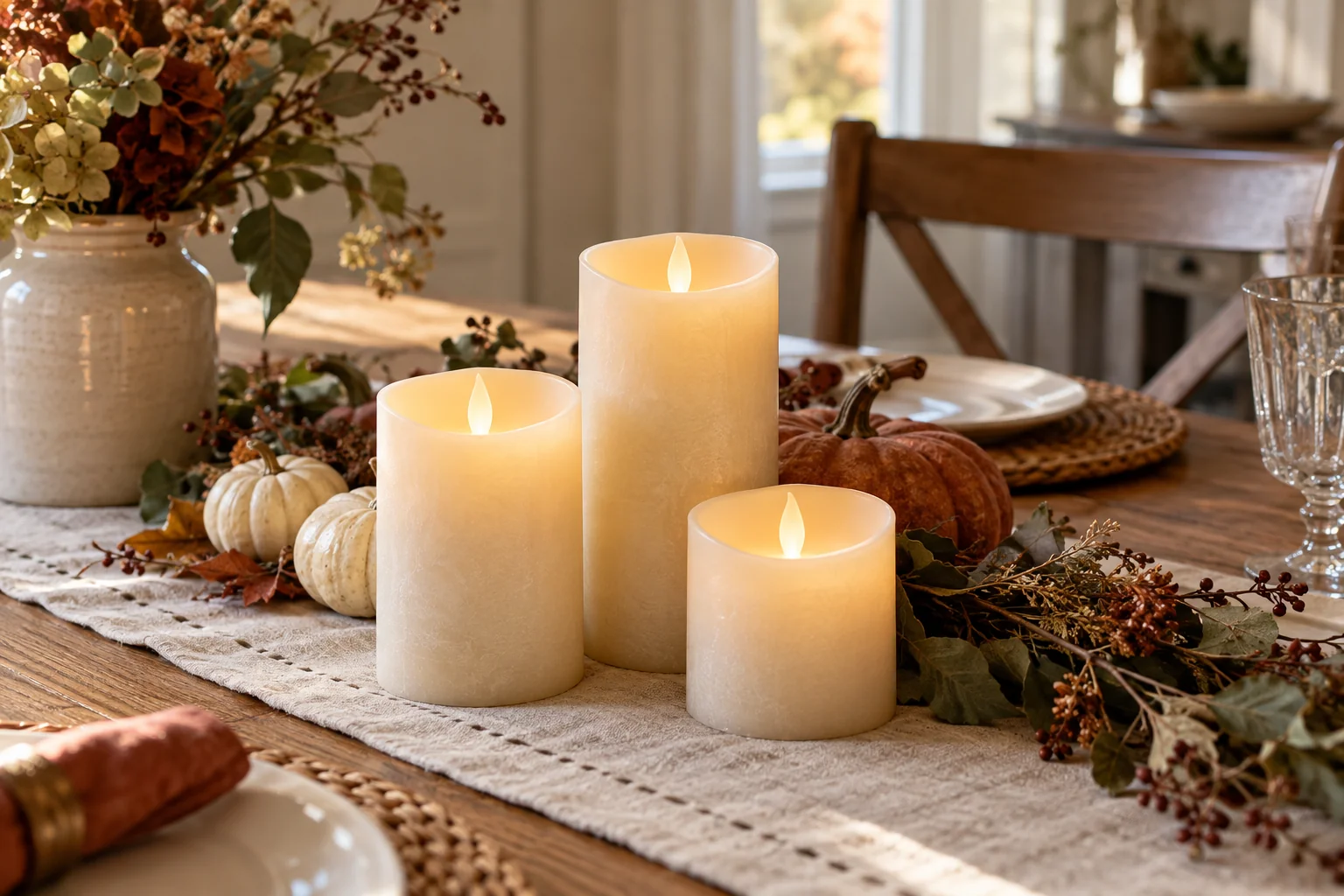
4. Add a soft glow with flameless candles
Candlelight is lovely; reaching across a flame to pass the potatoes is less appealing. Battery-operated flameless candles give you a warm glow without an open flame among the napkins and decorations.
Use a small cluster, switch them on before guests arrive, and check the batteries the day before. Look for a warm light that suits the room rather than a bright bluish LED. The U.S. Fire Administration recommends considering flameless candles as an alternative to burning candles.
A practical touch: If your budget is tight, use the room lighting you already have instead of buying candle sets.
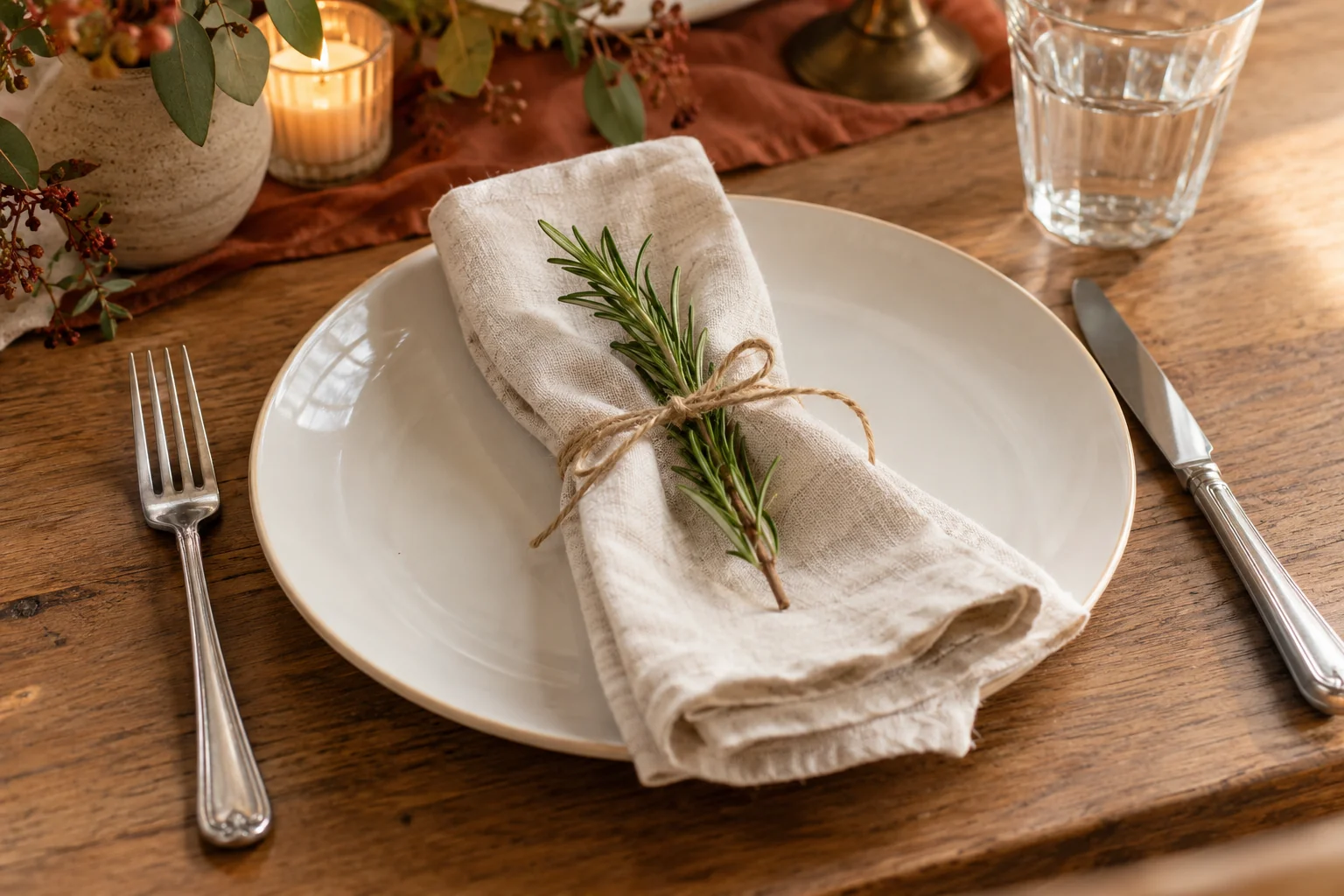
5. Tie a rosemary sprig around a napkin
This is a small detail guests can actually notice when they sit down: a cream napkin, a loose loop of twine, and one fresh rosemary sprig. It adds green without needing a decorative object at every seat.
Wash and dry the herb, fold the napkin, then tie the twine loosely enough to slip off. Keep the sprig small and remove loose needles before placing it on the plate. You can also leave the herb out entirely if someone dislikes fragrance around the meal.
A practical touch: If you have already bought rosemary for cooking, set aside a few clean sprigs before preparing dinner.
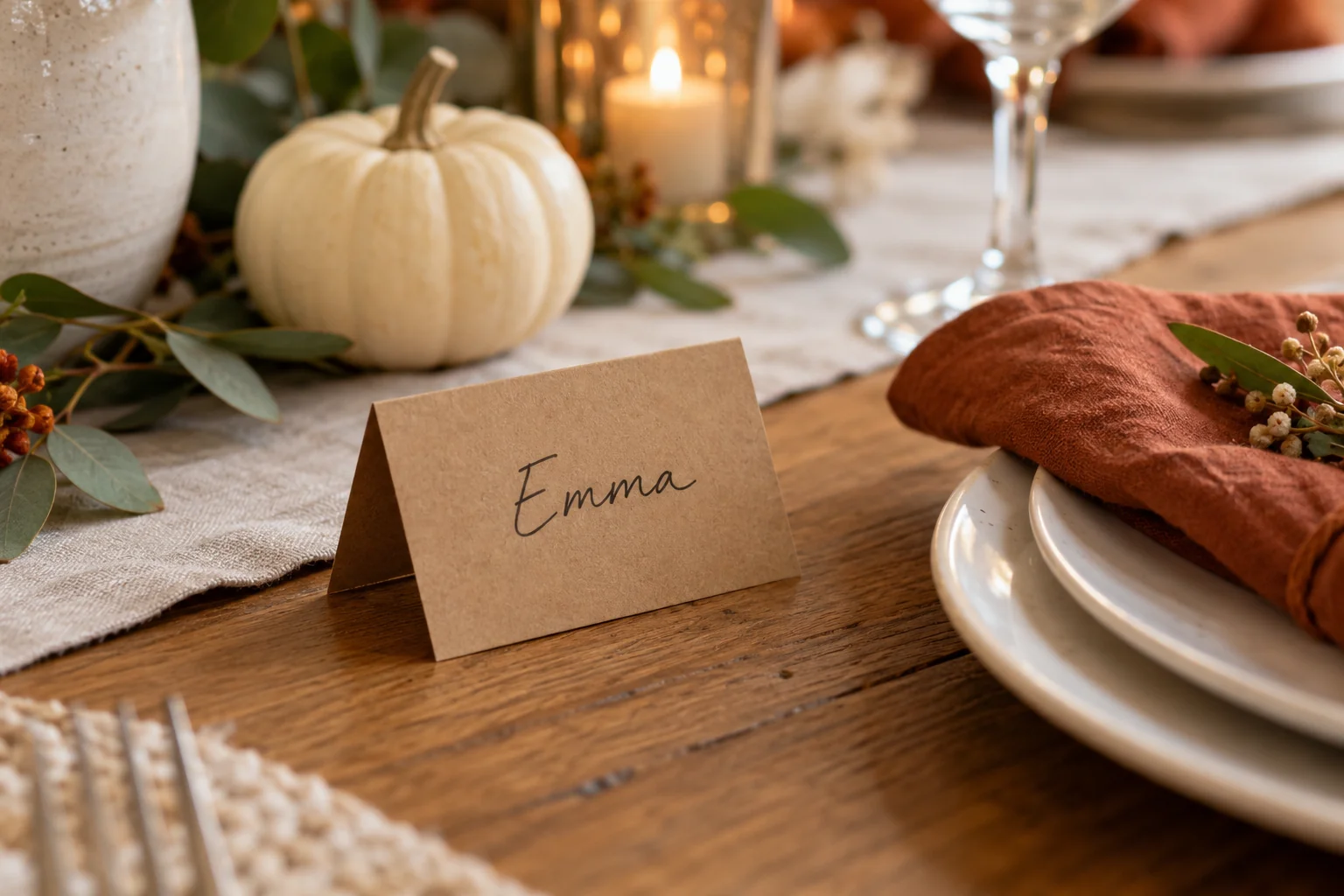
6. Write the names by hand
A handwritten place card makes a seat feel prepared for a person, not just arranged for a photograph. Fold cardstock into a little tent and write the name in your usual handwriting. You do not need calligraphy skills.
Make one sample first so you can check the size beside a glass. At a casual Friendsgiving, add a tiny conversation prompt on the inside: “What was your best meal this year?” Keep cards away from condensation and spills so the ink stays readable.
A practical touch: Use leftover cardstock or the clean reverse of a suitable paper offcut.
7. Borrow a few pears from the fruit bowl
If seasonal ornaments feel like one more thing to store, use whole pears instead. A shallow bowl with a few pieces of fruit gives the table a soft green or golden color, depending on what you already have.
Choose sound fruit, handle it gently, and keep it separate from decorative materials that could transfer paint or glitter. A low bowl works better than a tall stand on a small table. After the gathering, return the fruit to your normal meal plans.
A practical touch: Apples can give the same simple effect; use whichever fruit your household will actually eat.
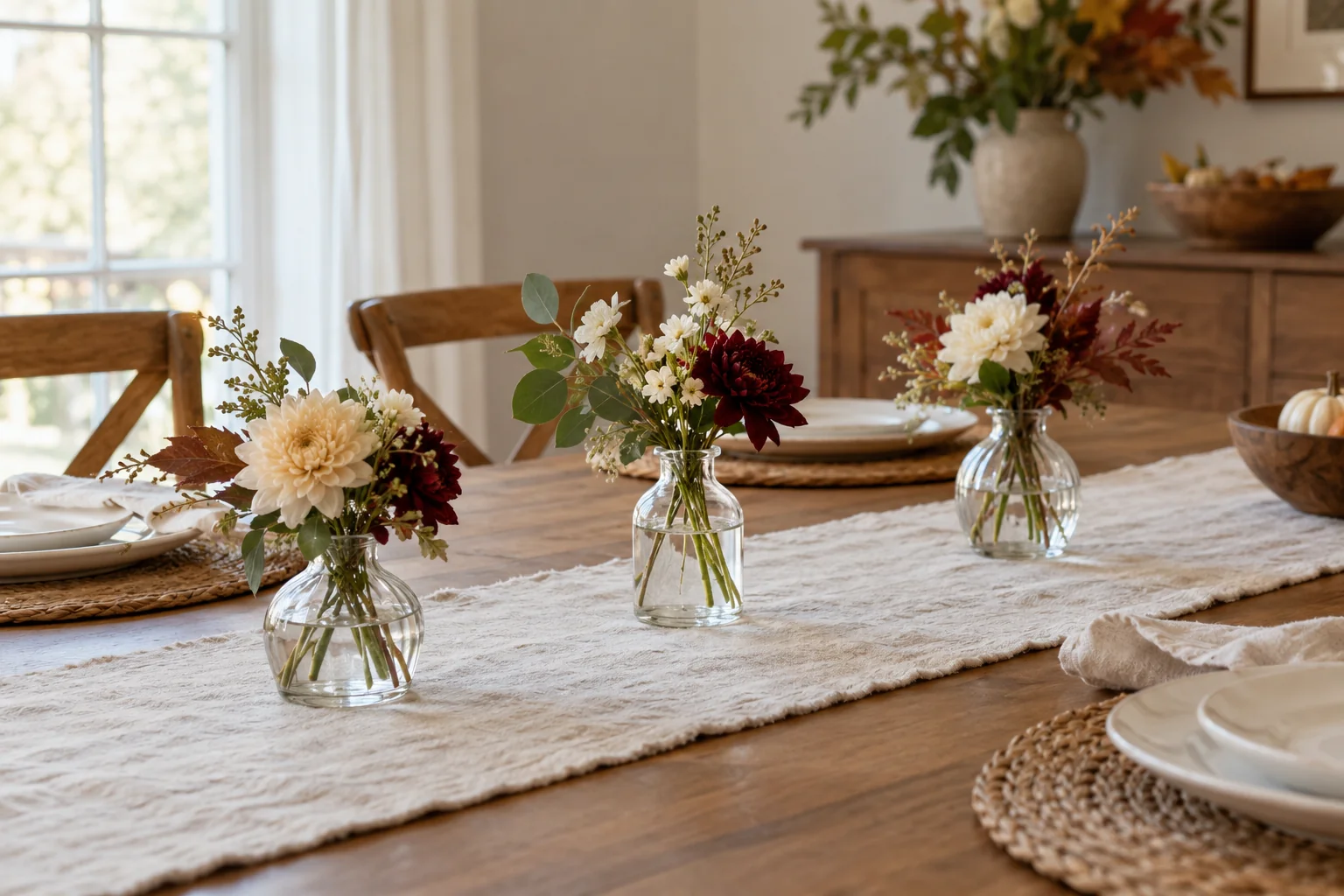
8. Split one bunch of flowers between small vases
You do not need a large florist arrangement to have flowers at dinner. Divide a modest bunch between two or three small vases, repeating a couple of colors rather than mixing every autumn shade. The Food Network’s inexpensive Thanksgiving centerpiece ideas are also useful if you want a simple grocery-store starting point.
Trim the stems gradually, checking the height from a seated position. Leave space between the vases for dishes and glasses. Clean jars can substitute for bud vases if you already own them. The point is a little color along the table, not a floral wall between guests.
A practical touch: Start with the containers you own, then buy only enough stems to fill them lightly.
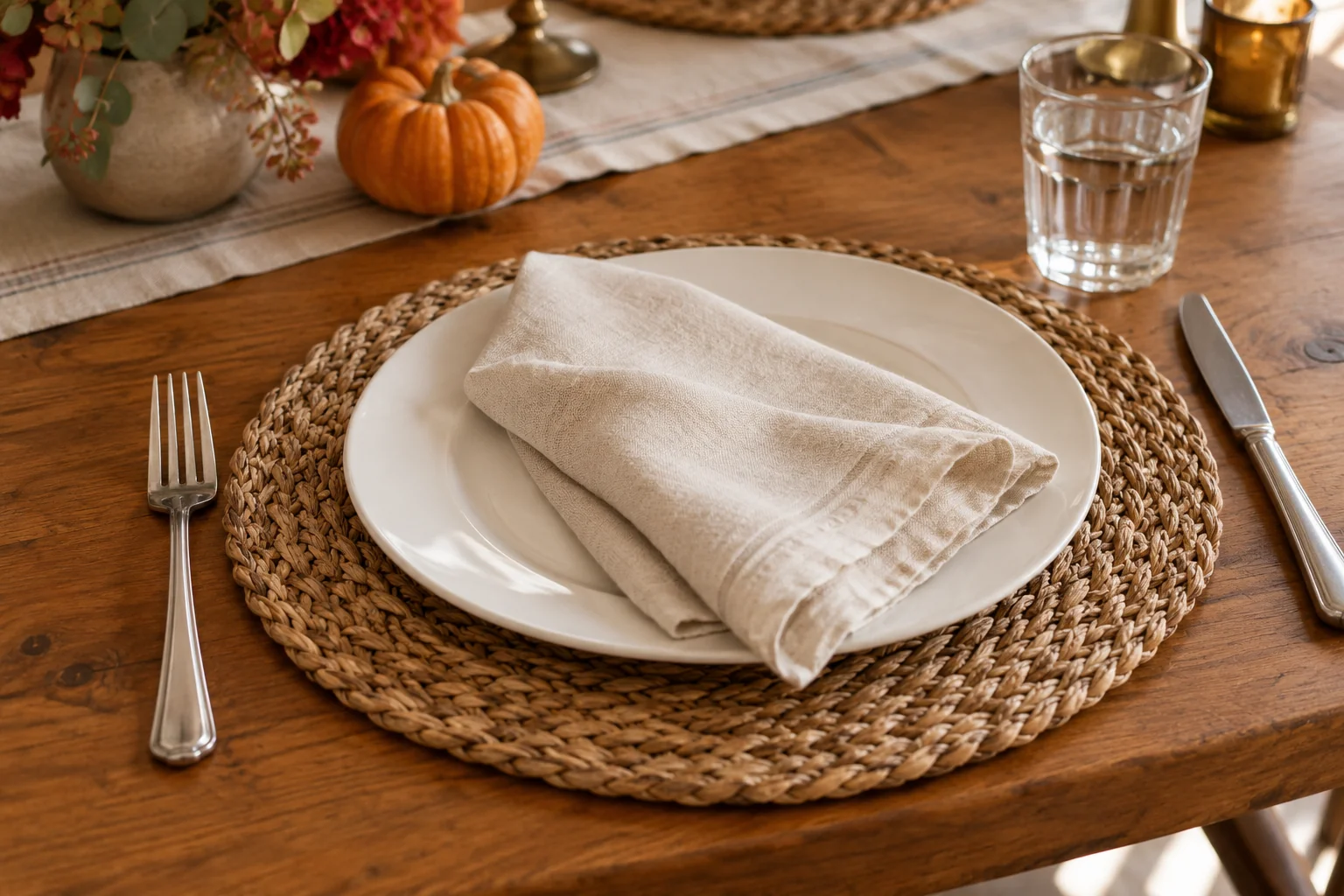
9. Use a woven placemat as your texture layer
Woven placemats are useful when plain plates need a little contrast. On a wooden table, their texture can create definition without adding a busy pattern.
Set out all the mats before adding anything else. If neighboring mats overlap or push the glasses toward the edge, skip them and let the runner do the work. You do not need a placemat, charger, runner, and tablecloth all at once. Choose the layers that fit the table you actually have.
A practical touch: Buy a set only if it fits your guest count and you expect to use it for other meals.
10. Fold a simple pocket for the cutlery
A napkin pocket is useful when you want each seat to look tidy without buying napkin rings. Fold the bottom of a rectangular napkin upward, then fold the sides behind to hold the cutlery.
Try the fold with one napkin before doing the whole stack. Very small or slippery napkins may not hold their shape, and that is fine: a simple rectangle works too. For a buffet, leave the bundles near the end of the food line so guests can pick one up after filling their plates.
A practical touch: Practice with the napkins you own rather than buying fabric just for a complicated fold.
11. Make the centerpiece easy to move
A small tray or wooden serving board can hold your pumpkins and flameless candles together. When someone arrives with another casserole, you can lift the whole arrangement instead of clearing six separate objects.
Keep the arrangement small enough to move comfortably with two hands. Give it a temporary landing spot on a sideboard before dinner. If the board is needed for bread or food preparation, save it for that job and group the decorations directly on the runner.
A practical touch: Use a clean tray you already own; a new decorative tray is optional.
12. Choose a bowl with a little character
Before searching for “Thanksgiving centerpiece,” open the kitchen cupboard. A ceramic mixing bowl, a shallow serving dish, or a fruit bowl may be the most interesting piece you already own.
Fill it sparingly so the shape remains visible. A textured cream bowl with three little pumpkins can feel more considered than a collection of unrelated ornaments. If you borrow a decorative vessel from another room, clean it appropriately and do not use it for food unless it is intended for that purpose.
A practical touch: Move one good piece into the spotlight instead of buying several smaller decorations.
13. Use ribbon instead of new napkin rings
A strip of ribbon is enough to bring your accent color to each seat. Olive, rust, or burgundy can work well against neutral napkins.
Cut equal lengths and use loose knots that guests can undo easily. Keep the ribbon outside the areas that touch food, and avoid glittered ribbon that sheds onto the plates. If the ribbon is too short for bows, a simple band secured at the back can still create the same repeated color.
A practical touch: Look through your wrapping supplies before ordering a new spool.
14. Let kraft paper become part of the conversation
A brown-paper runner gives a casual table a different sort of charm. Flatten the paper beforehand, then write a small welcome or draw a fine border along the edge.
You can leave a little space for guests to add something they are thankful for. Test your pen on a scrap first, and protect the tabletop from ink bleed-through. Kraft paper is decoration, not heat protection: use proper trivets under hot serving dishes. Pair it with plain plates so the table stays visually calm.
A practical touch: This works especially well for an informal Friendsgiving where guests enjoy a small shared activity.
15. Match the mood, not every plate
Hosting six when your dish set serves four is a familiar problem. Try combining white and cream plates, then repeat the same napkin color and glass style at every seat.
Lay everything out before shopping for replacements. You may find that two slightly different plates look comfortable together once the rest of the setting is consistent. If the shapes are very different, alternate them deliberately rather than leaving one guest with the obvious odd plate.
A practical touch: Borrow a few suitable pieces when possible, and agree on how they will be cleaned and returned.
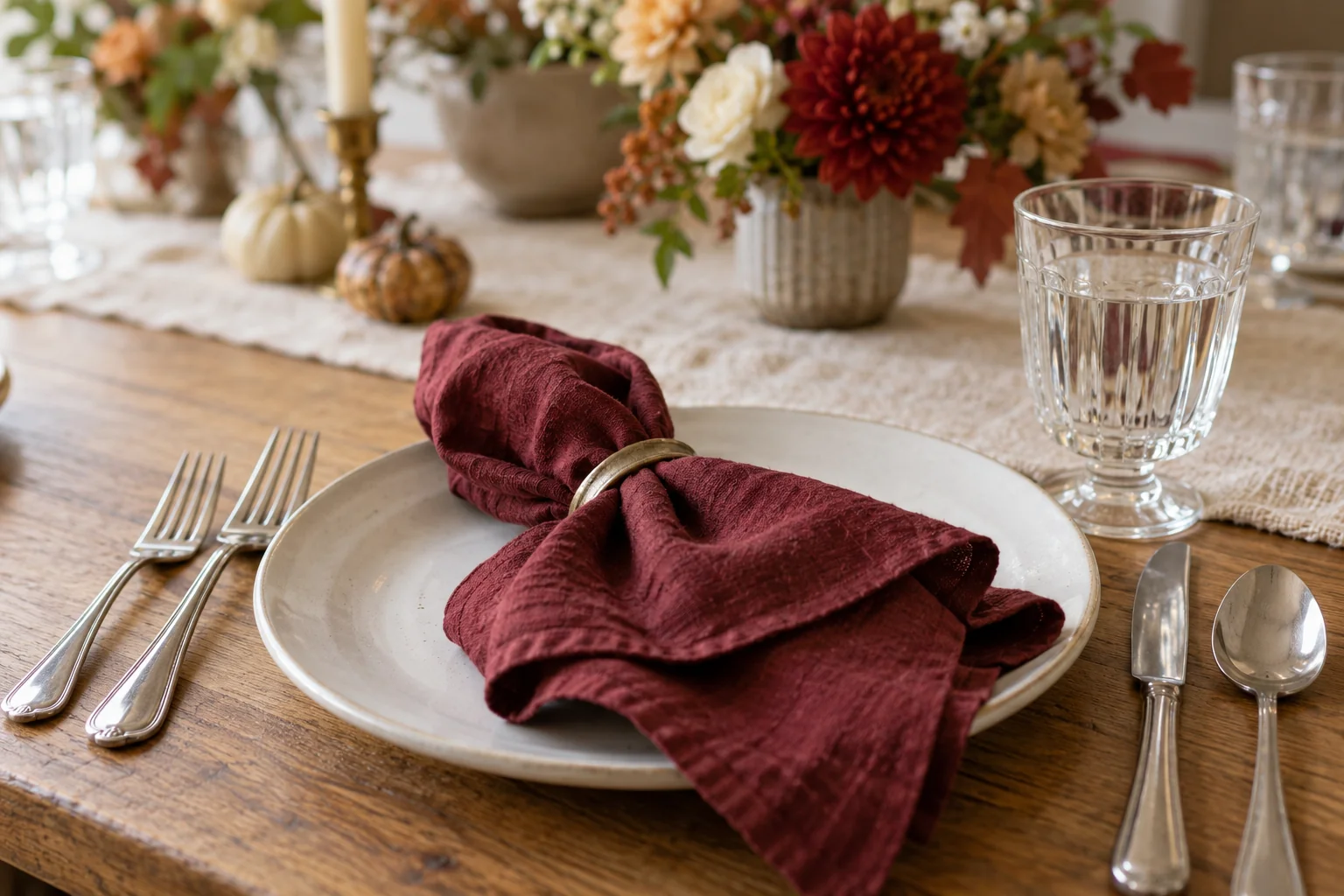
16. Let burgundy be the one bold detail
If you want an evening table with a little depth, burgundy napkins are an easy place to start. They bring color close to the white plates without requiring a darker tablecloth or a large floral display.
Keep the rest simple: wood, clear glass, and a neutral runner. Check the napkin care instructions before washing, particularly when mixing a deep color with pale linens. You can try the look with paper napkins first if you are unsure about buying a reusable set.
A practical touch: Choose a color you would happily use again at Christmas or another dinner.
17. Make room for a gratitude note
Put a small blank card at each seat with a gentle prompt: “What is one little thing you are glad for today?” It gives the setting a personal detail and offers a quiet activity while people settle in.
Let guests decide whether to share. A warm gathering does not need a compulsory speech from everyone. If children want to join in, they can draw an answer. Keep a few pens nearby so nobody has to search through drawers during dinner.
A practical touch: Use the same cardstock as the place cards and cut the offcuts into smaller notes.
18. Polish the glassware before adding more decor
Sometimes the table needs ten minutes of preparation more than another purchase. Check glasses for water spots, wipe the cutlery, and remove crumbs from placemats before arranging the centerpiece.
A plain clear tumbler can look lovely beside a carefully folded napkin. Use the glassware that suits the people coming, including sturdy cups for children where appropriate. Fill a pitcher close to dinner, and leave enough space to set it down without disturbing the flowers.
A practical touch: One water glass per person is enough if that is all your menu needs.
19. Carry the colors over to the buffet
If the dining table is small, let the counter do more work. Put food on a nearby surface and repeat just one or two decorative details there, such as a rust napkin beneath the bread basket or a small pumpkin at the far end.
Keep the serving route clear and leave stable landing spaces for hot dishes. Use readable food labels where helpful, but check ingredient information before making allergy claims. Guests should not have to reach around a vase to serve themselves.
A practical touch: For more on keeping compact rooms comfortable, browse our small living room ideas before moving furniture for guests.
20. Keep a round table centerpiece compact
A long arrangement can look awkward on a round table. Start with a low bowl, one small vase, or a little cluster of pumpkins in the center.
Set the plates and glasses first, then use only the space that remains. Sit down and check the view across the table. If someone would have to lean sideways to see another guest, shorten the arrangement. A round tray can help contain the decorations, but it is not necessary if you already have a suitable bowl.
A practical touch: When dinner is served family-style, move the centerpiece to a side table rather than squeezing bowls around it.
21. Leave a place for the food to be beautiful
Your bread basket, favorite pie dish, or ceramic serving platter can contribute to the table too. Leave an open spot for one attractive serving piece instead of filling every gap with decor.
The goal is a table that improves when dinner arrives. Use food-safe serving dishes and suitable heat protection, and keep decorative materials away from the food. If your menu needs the entire table, let the centerpiece live on the buffet for the meal. You have not undone the decorating; you have made it useful.
A practical touch: Before buying another ornament, ask whether something already coming from the kitchen can fill that space.
A simple $30 Thanksgiving table decor budget
If you have $30 to spend, decide where it will make the biggest difference before you open a shopping app. This is a suggested allocation, not a checked shopping basket or a claim about current retail prices. It assumes you already own dinnerware, furniture, and lighting.
| What to allow for | Planned amount |
|---|---|
| Mini pumpkins or seasonal fruit | $8 |
| Napkins or ribbon | $7 |
| Small bunch of flowers | $8 |
| Cardstock and simple supplies | $3 |
| Extra allowance | $4 |
| Total spending limit | $30 |
If local prices do not fit the plan, remove an item rather than stretching the budget. Already own cloth napkins? Keep that $7. Have a bowl of fruit? You may not need pumpkins at all. The savings come from choosing, not from buying every budget-friendly suggestion.
Three simple Thanksgiving tablescape ideas to copy
For a small apartment table
Use plain plates, folded napkins, and one low bowl holding a few mini pumpkins. Skip chargers. Serve food from the kitchen counter and move the centerpiece if the table needs to hold extra bowls.
For a cozy traditional Thanksgiving
Combine a cream runner, orange pumpkins, and rosemary napkin bundles. Use your existing warm lighting. You have texture, color, and a seasonal detail without needing a separate ornament at every seat.
For an elegant evening dinner
Pair white plates with burgundy napkins, clear glasses, and two or three low flower arrangements. Let the darker napkins carry the color; there is no need to buy matching burgundy candles, ribbons, and plates as well.
The two-minute check before guests arrive
Sit down with a glass at one setting. Can you see the person opposite you? Can you move your elbows? Is there somewhere stable to put a serving bowl? Now lift the centerpiece once. If moving it requires dismantling the entire table, simplify it.
Check that napkins are clear of hot dishes, glasses are not perched on uneven fabric, and decorations are not shedding into plates. A table should work for someone eating dinner, not just someone taking its picture.
Questions you might have before setting the table
What is the cheapest way to decorate a Thanksgiving table?
Reuse your dishes and glassware, choose one centerpiece from items you own, and finish with folded napkins or handwritten cards. Buy only what fills a genuine gap.
How do I make inexpensive decorations look elegant?
Repeat a few colors, keep the scale appropriate to the table, and leave space between objects. Clean glasses and a tidy fabric layer can do more than extra ornaments.
What can I use instead of a Thanksgiving tablecloth?
A runner, placemats, or a bare wooden table can all work. Paper is another casual option, but it does not replace trivets or other appropriate surface protection.
Can I decorate without pumpkins?
Absolutely. Use a bowl of pears, a few short flower stems, or burgundy napkins. Thanksgiving colors do not have to be orange, and your table does not need a themed ornament to feel welcoming.
What should I buy first if I can afford only one thing?
Look at your existing setting. If it needs color, choose napkins. If it needs a focal point, choose a few flowers or seasonal fruit. If it already looks complete, you may not need to buy anything.
How can I use these decorations again?
Choose neutral runners, everyday glass vases, and napkins you enjoy beyond November. Put seasonal accents away separately so the reusable pieces stay in your regular rotation.
A welcoming Thanksgiving table is better than a perfect one
Leave a little room for the bread basket, the dish someone brings, and the extra glass you forgot you would need. Those things are part of the table, too.
Start with what you own, choose a few details you enjoy, and give yourself permission to stop. If you are saving ideas for later, pin the look closest to your own room—not the one that would require buying everything again.