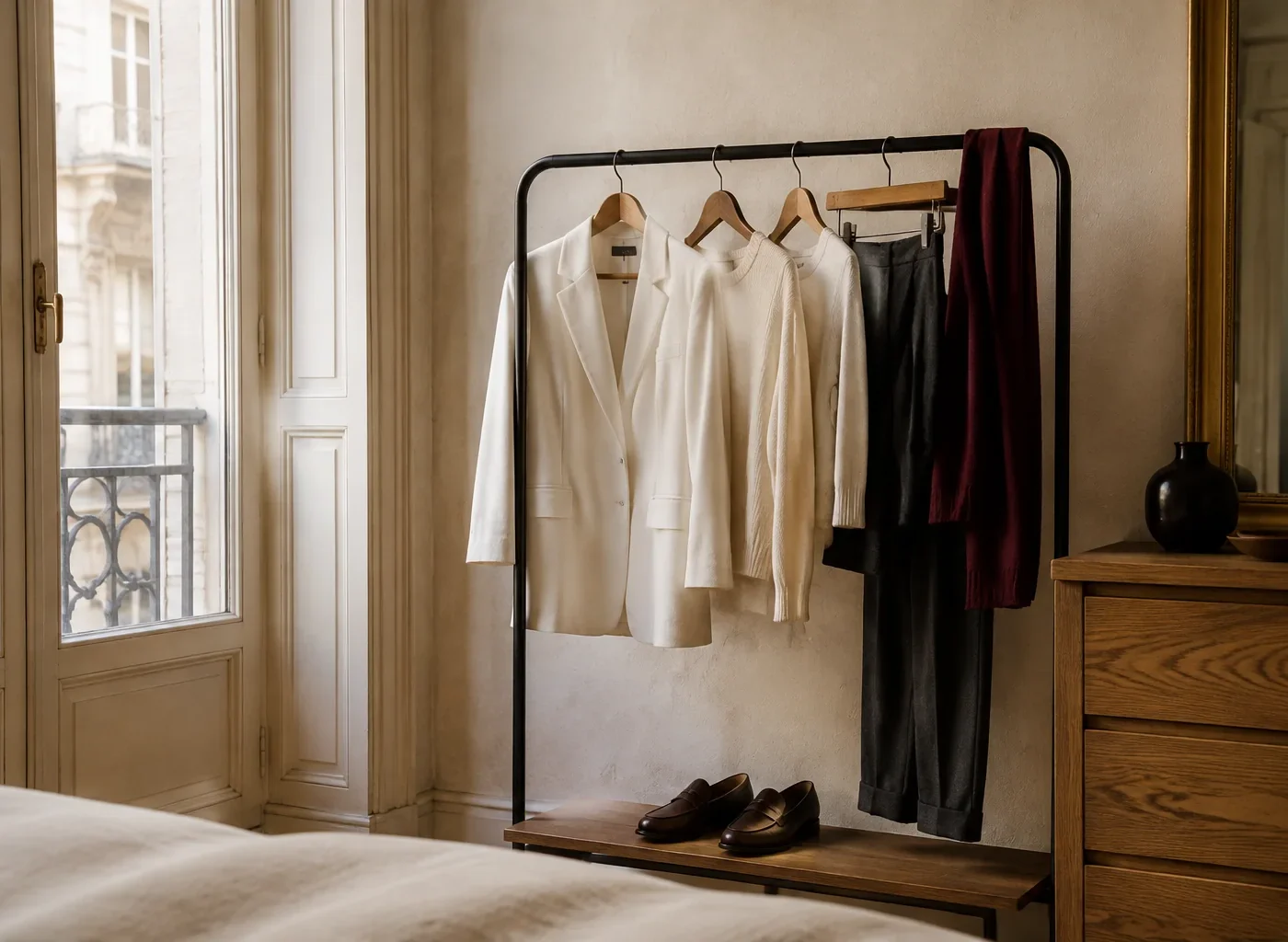
A capsule wardrobe is useful only when it reflects the life you actually live. The goal is not to own the fewest clothes possible. It is to build a smaller, clearer collection that makes getting dressed easier and still feels unmistakably like you.
Start with your week, not a shopping list
Before choosing colours or counting hangers, write down how you spend a normal seven days. Include work, errands, exercise, social plans, time at home, and any regular occasions that need a particular dress code. A wardrobe designed around an imagined lifestyle will always feel incomplete, however beautiful it looks.
Turn that routine into a simple ratio. If most of your week is casual, most of your wardrobe should be casual too. Keep special pieces for real events, but do not let them crowd out the clothes that need to work every Monday morning.
Do a calm wardrobe edit
Take everything out by category rather than emptying the entire wardrobe at once. Begin with trousers, then knitwear, shirts, dresses, outerwear, and shoes. For each piece, ask three practical questions:
- Does it fit comfortably today?
- Have I worn it in the past year?
- Can I style it with at least three other pieces I already own?
Keep a small “decide later” rail if you need one. Wear those pieces during the next two weeks. Real use gives a better answer than a rushed afternoon of decluttering.
Choose a flexible colour story
A practical capsule usually works best with two or three neutrals and one or two accent colours. Your neutrals do not have to be black, white, and beige. Navy, chocolate, olive, charcoal, cream, or denim may suit you better. Choose shades that work together and repeat the colours you already reach for.
Build around outfit formulas
An outfit formula is a combination you can repeat with different pieces: straight trousers, a soft knit, and loafers; jeans, a shirt, and a blazer; or a simple dress with a light jacket. Three or four reliable formulas create more value than a wardrobe full of unrelated statement items.
Lay out each formula and check for gaps. If five tops work with one pair of trousers but none work with your skirts, the answer may be a more versatile top—not several new outfits.
Prioritise the pieces that connect everything
Good foundation pieces are quiet connectors. Depending on your style, that might mean well-cut trousers, dark jeans, a crisp shirt, a fine knit, a relaxed blazer, a day dress, and two pairs of comfortable shoes. Focus on proportion, fabric, and repeat wear rather than trend labels.
There is no universal number of items. A useful capsule may contain 25 pieces or 50. Climate, laundry routine, work, cultural dress, and personal preference all change the answer. A number can provide a boundary, but it should never replace common sense.
Shop slowly and with evidence
Keep a written gap list for at least two weeks. When you consider a purchase, style it mentally with three existing outfits and identify the exact role it will play. Check care instructions, fabric feel, movement, and whether you would still choose it without a sale price.
Buy for the season you are in. A beautiful coat bought during a warm climate may sit untouched while the everyday shoes you truly need remain unresolved.
Use the seven-day wear test
Choose a small working rail for one week: around five tops, three bottoms, one or two layers, two pairs of shoes, and your usual accessories. Photograph each outfit and note what felt easy, uncomfortable, or repetitive. At the end of the week, adjust the mix instead of starting again.
A simple capsule wardrobe checklist
- Reflects your real weekly routine and climate
- Uses a palette that already appears in favourite outfits
- Contains several repeatable outfit formulas
- Includes comfortable, cared-for foundation pieces
- Leaves room for personality, occasion wear, and change
- Has a short, evidence-based gap list
A smaller wardrobe should create possibility, not pressure. Keep what serves you, repair what you love, and let the collection evolve as your life changes.